
Batu Punggul vs the Mulu Pinnacles: Which Borneo Giant Is for You?
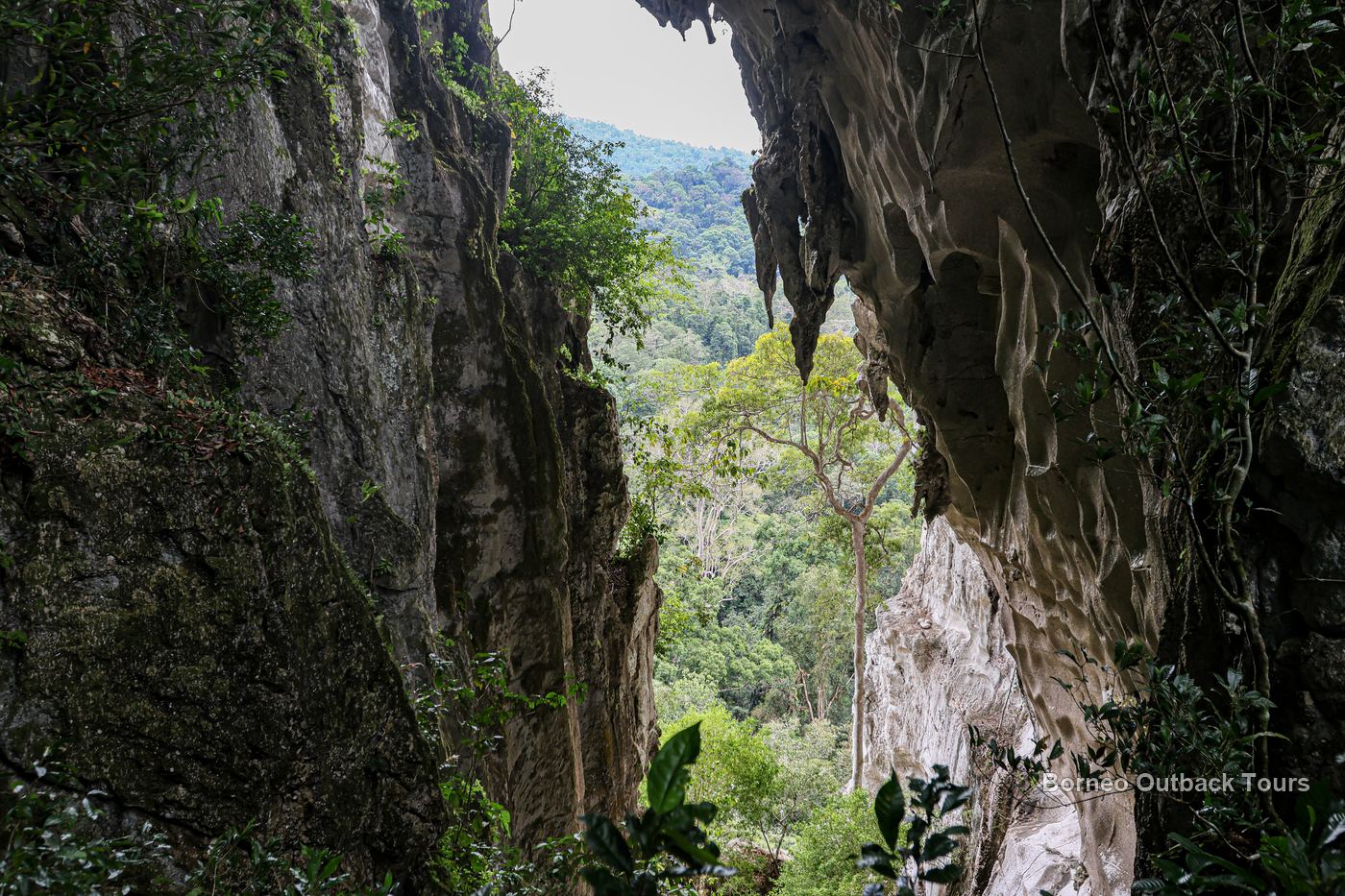
Borneo does limestone drama like nowhere else on Earth, and two names stand above the rest: the Pinnacles of Gunung Mulu in Sarawak, and Batu Punggul in Sabah's deep interior. Both are bucket-list karst. They could hardly be more different to experience. One you admire from a viewpoint after a brutal climb; the other you scale with your own hands. This guide compares them honestly, cost, difficulty, logistics and payoff, so you can pick the right rock, or justify doing both.
The Contenders at a Glance
The Mulu Pinnacles
A forest of razor-edged grey blades, up to 45 metres tall, erupting from the flank of Gunung Api inside UNESCO-listed Gunung Mulu National Park, Sarawak. The classic trip is 3 days / 2 nights from park HQ: boat and trek to Camp 5, then a notoriously steep 2.4 km ascent (about 1,200 m of gain, with ropes and ladders near the top) to the viewpoint facing the Pinnacles. You do not touch them; you earn the view.
Batu Punggul
A single limestone tower rising roughly 300 metres above the Sapulot river country in Sabah's interior, sacred in Murut tradition. The experience is the opposite of Mulu's: a free-scale climb of the pinnacle itself, gripping roots, karst holds and fixed ropes, no viewing platform, no crowds, with a summit panorama over unbroken primary rainforest. Read our full Batu Punggul guide.
Head to Head
- The experience: Mulu = pilgrimage to a viewpoint; Batu Punggul = hands-on ascent of the rock itself. If "climbing a jungle pinnacle" is the dream, only one delivers it literally
- Difficulty: Mulu's Pinnacles trail is longer and more punishing on legs (many rate it among Borneo's hardest day-hikes); Batu Punggul is shorter but more exposed, demanding a head for heights
- Time: Mulu needs 3 days minimum plus flights to Mulu airport; Batu Punggul climbs in a morning within a 2-to-4-day Sapulot itinerary by road and river from Kota Kinabalu
- Cost: Mulu adds up: flights, park fees, guides, Camp 5: often RM1,500 to RM2,500+ all-in. Batu Punggul is bundled inside all-inclusive Sapulot packages from around RM1,000 for multi-day trips that also include caves, waterfalls and a longhouse stay
- Crowds: Mulu is world-famous and Camp 5 books out; at Batu Punggul your group is usually the only one on the rock
- Surroundings: both sit in magnificent forest; Batu Punggul adds living Murut culture: the pinnacle is a sacred site, and your guides are its traditional custodians
Which Should You Choose?
Choose Mulu if you are collecting UNESCO landscapes, want the iconic photograph of the grey blade-forest, and relish a hard, structured park trek with the caves of Mulu (Deer Cave, Clearwater) as a spectacular bonus.
Choose Batu Punggul if you want to climb rather than look, prefer rivers and longhouses to park HQs, and value having a sacred mountain, a wild cave and jungle waterfalls in one journey without another tourist in sight.
Do both if Borneo karst is your thing: they are different enough that neither spoils the other. Many travellers pair Mulu's grandeur with Sapulot's intimacy in a single trip across the two states.
Planning Either Trip: The Practical Details
For Mulu: access is by air only (MASwings from Miri or Kota Kinabalu), and the Pinnacles trek must be booked with park HQ as a package, guide, boat, Camp 5 bunk, since independent walking is not permitted on this route. Trekking poles, 2 litres of water capacity and gloves for the rope-and-ladder summit section are the gear notes veterans repeat; knees feel the descent more than lungs feel the climb. Build in a buffer day: flights weather-cancel, and the caves (included in most itineraries) deserve unhurried time anyway.
For Batu Punggul: everything is arranged within Sapulot packages from Kota Kinabalu, transport, river legs, guides, camps, meals, so preparation is personal rather than logistical: grippy shoes that can get wet, a small daypack for the climb, and an honest self-assessment about exposure, the upper sections are genuinely airy, and there is no shame in enjoying the pinnacle from the river while others summit. Season advice for both is the same: the March-to-October window keeps Mulu's trail and Sapulot's rivers at their most cooperative, with the shoulder months adding solitude to Mulu that Sapulot enjoys year-round.
Frequently Asked Questions
Can you climb the actual Mulu Pinnacles?
No. The formations are protected and razor-sharp; the trek reaches a viewpoint facing them. Batu Punggul is the Bornean pinnacle you can physically climb.
Which is harder?
Most fit hikers find Mulu's ascent more exhausting; Batu Punggul is shorter but airier, with hands-on scrambling. Fear of heights matters more at Batu Punggul; knee endurance matters more at Mulu.
Do I need climbing experience for Batu Punggul?
No technical skills: the route uses natural holds, roots and fixed ropes under Murut guides who climb it constantly. Sound fitness and steady nerves are the requirements.
The Bottom Line
Mulu's Pinnacles are Borneo's great spectacle; Batu Punggul is Borneo's great participation. See one, climb the other, and you will understand why this island's limestone inspires devotion. If you only have room for a single pinnacle and want it under your fingertips rather than across a valley, Sapulot is waiting.
Batu Punggul climbs are operated by Borneo Outback Tours, founded by the Murut community for whom the pinnacle is sacred.
Related Reading
- Batu Punggul: Complete Guide to Sabah's Limestone Pinnacle
- Pungiton Cave: Sabah's Sacred Hidden Cave System
- Borneo Itinerary: 7 to 14 Days Done Right
Ready to Experience the Real Borneo?
Small-group jungle, cave and cultural journeys run year-round from Kota Kinabalu, guided by the Murut community of Sapulot.
View Tour Packages WhatsApp Us

.svg)