
Sabah Jungle Camps: Where You Actually Sleep in Borneo's Interior
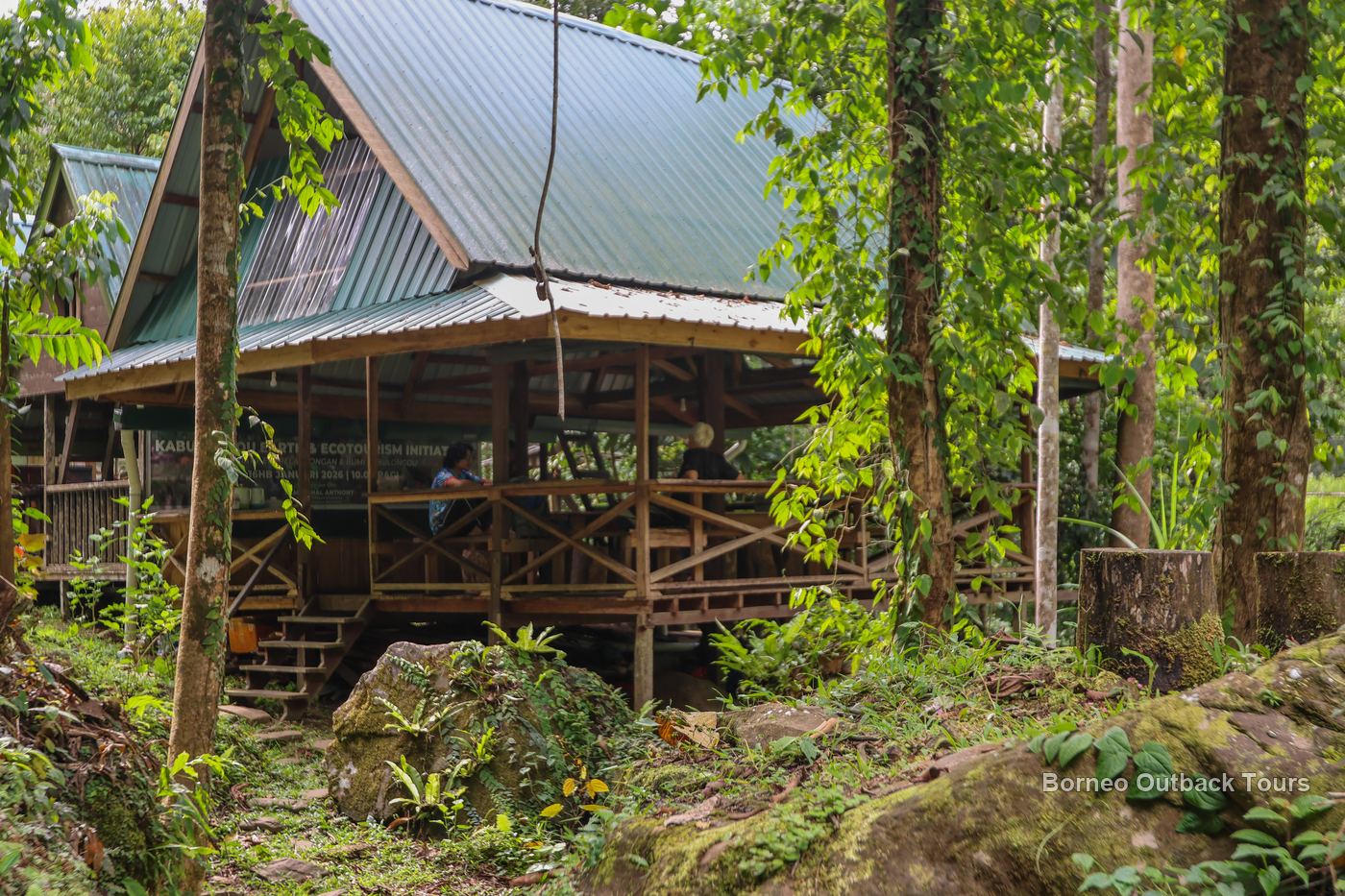
Everyone asks about the trekking, the caves and the climb. Almost nobody asks the question that decides whether they will enjoy any of it, which is where they will be sleeping at the end of the day.
In Sabah's interior the honest answer is: in a timber hut with no walls to speak of, on a mattress under a net, ten metres from a river, with the forest making a considerable amount of noise. That is the standard, and it is better than it sounds. Here is what to expect.
The riverside ecocamp
The most common style. A cluster of raised timber huts on stilts under the canopy, roofed in shingle or zinc, open at the sides, set on flat ground near a river. Inside, mattresses in a row with mosquito nets over them. A common shelter with long tables where meals are served and everyone ends up sitting after dark.
Vangkaakon and Kabulongou both work this way. The stilts keep you above the damp and out of reach of most things that crawl; the open sides mean you sleep in moving air, which matters far more than a fan would. Washing happens in the river, and the river is generally the best part of the day.
The cave camp
At Pungiton, the sleeping platform sits at the mouth of the cave system itself, under an overhang of limestone rather than a roof. Beds are laid out on a raised deck, and the cave breathes cool air over them all night, which makes it the most comfortable night's sleep in the region and the strangest.
The trade-off is neighbours. Swiftlets and bats commute past at dusk and again before dawn, and the cave has its own residents further in, including some very large and entirely harmless spiders. Guests who sleep badly the first night usually sleep fine the second.
The longhouse
Not a camp, but the third place you may end up. In the villages around Sapulot, guests sleep in the communal space of a family longhouse on mattresses along the wall, sharing the household's bathroom and its evening. It is the most sociable option and the least private one. We cover it properly in our guide to longhouse stays.
The practical detail
Beds. Provided. Mattress, pillow, blanket, mosquito net. You do not need a tent or a sleeping bag.
Bathrooms. Either the river, or a simple room with a water tank and a scoop. Squat toilets are common. Bring biodegradable soap, and quick-dry clothes so you are not carrying wet cotton for three days.
Power. Generator or solar at some camps, for a few hours after dark. Assume no charging and bring a power bank. There is no phone signal at most interior camps, which regular visitors come to regard as a feature.
Food. Cooked on site by the camp team: rice, river fish, jungle ferns, chicken, whatever the farm sent up. Meals are eaten together at long tables. Vegetarians are catered for with notice.
Temperature. Warm and humid, rarely below about 22 degrees at night. The cave camp is the exception and the cool air there is genuine.
Noise. Cicadas at dusk, frogs after rain, gibbons and hornbills at first light. Earplugs are a reasonable thing to pack and nobody will judge you.
What to bring
A head torch, and a spare. Insect repellent. Leech socks for wet trails. Quick-dry clothing, one set kept dry in a bag for sleeping in. Flip-flops for camp. A power bank. Any medication you need, because the nearest pharmacy is several hours of road away. Our full Borneo packing list has the rest.
Who runs them
The camps around Sapulot are built and staffed by the Murut families whose land they sit on, and the fees stay in the villages. That is not a marketing line, it is the arrangement, and it is why the guide walking you in can name the trees and tell you which of his relatives cut the path. Read more on how that works in community based tourism.
Come expecting a lodge and you will be disappointed. Come expecting a clean mattress, a net, a river to wash in and a forest that gets loud at four in the morning, and you will not want to leave.
Frequently Asked Questions
Every camp described here is run by the Murut community that owns the forest around it. See them on a journey to Orou Sapulot.
What are jungle camps in Sabah like?
Simple and open-sided. Expect a raised timber platform or hut with a roof, a mattress or mat with a mosquito net, shared washing at the river or a basic bathroom, and no air conditioning. They are dry, clean and comfortable enough to sleep well in, but they are not lodges.
Do Sabah jungle camps have electricity and wifi?
Mostly no. Some camps run a generator or solar panel for a few hours in the evening, enough for lights and charging a phone. There is no mobile signal at most interior camps and no wifi. Bring a power bank and download anything you need beforehand.
Do you need your own tent or sleeping bag?
No. Mattresses, pillows, blankets and mosquito nets are provided at the camps around Sapulot. A sleeping bag liner is nice to have but not needed. Nights in the interior are warm and rarely drop below about 22 degrees.
Are the camps safe and what about insects?
Yes. Camps are permanent structures run by local guides who know the ground. Mosquitoes are present at dusk, and leeches turn up on wet trails rather than in camp. Nets, repellent and leech socks handle both.
Can you shower at a jungle camp?
Usually in the river, which is the pleasant part of the day rather than the ordeal it sounds. Some camps also have a simple bathroom with a water tank and a scoop. Bring quick-dry clothing and biodegradable soap.
Related Reading
- Longhouse Stays in Borneo: What a Night Is Really Like
- Borneo Packing List: What You Actually Need
- Pungiton Cave: Sabah's Sacred Hidden Cave System
Ready to Experience the Real Borneo?
Small-group jungle, cave and cultural journeys run year-round from Kota Kinabalu, guided by the Murut community of Sapulot.
View Tour Packages WhatsApp Us

.svg)