
Rock Climbing in Sabah: Every Place You Can Climb in Borneo
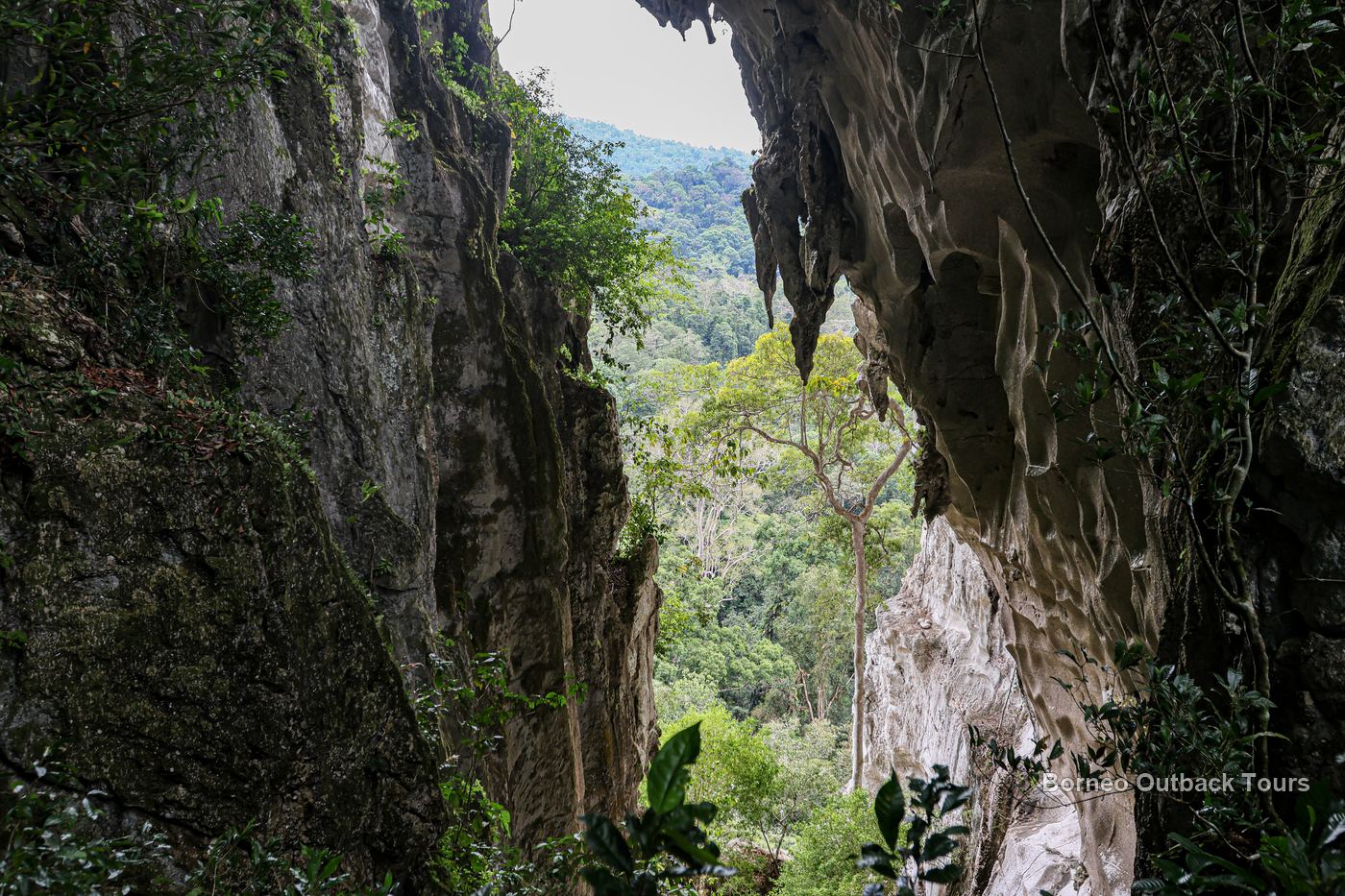
Sabah is not a climbing destination in the way Krabi or Yangshuo are. There is no guidebook on sale at the airport, no crag-side cafe, nowhere to rent a rope, and the total number of bolted routes in the whole state runs to about thirty. Anyone flying in with a rack and a plan is going to be disappointed.
What Sabah does have is four completely unrelated ways to get on rock, in four corners of the state, and each of them is worth doing for a reason that has nothing to do with the others. One is a sacred limestone pinnacle you climb with your bare hands. One is the highest via ferrata on the planet. One is a sandstone sea cliff you reach by fishing boat. And one was, for three years, home to what may still be the hardest route ever climbed at altitude.
Here is the full picture, and what each one actually asks of you.
The short version
| Where | What it is | Rock | Difficulty | Getting there |
|---|---|---|---|---|
| Batu Punggul, Sapulot | Free-scale ascent of a limestone pinnacle, no ropes | Limestone | No technical skill, but real exposure and grip strength | Two hours by road from Keningau, then a longboat |
| Mount Kinabalu via ferrata | Cabled routes across the summit plateau | Granite | Beginner (Walk the Torq) or mid (Low's Peak Circuit) | Kinabalu Park, about two hours from Kota Kinabalu |
| Berhala Island, Sandakan | Bolted sport routes on sea cliffs, around 30 lines | Sandstone | French 5a to 7b | Boat from Sandakan, tide dependent |
| Kinabalu's granite walls | Big wall and hard sport, mostly closed | Granite | 8a and upwards, expedition permits | Not open access, and Tinipi has been shut since 2015 |
| Sabah Indoor Climbing Centre | The state's only climbing gym | Plastic | Bouldering, top rope and lead, all levels | Likas, in Kota Kinabalu |
Batu Punggul: the pinnacle in the interior
Batu Punggul is a limestone tower of roughly 300 metres standing out of primary rainforest in the Sapulot area of southwestern Sabah, close to the Kalimantan border. It is the one climb on this list that belongs to a community rather than an operator or a park. To the Murut families who live along the Sapulot River it is a sacred place, and the guides who take you up are from the villages at its foot.
The approach is a 45 minute trek from the riverbank, which you reach by longboat from Tataluan village. The climb itself is a free-scale: no ropes, no harness, no fixed anchors. You use natural holds in the rock, hands and feet, following a line the guide knows. Most people take 45 minutes to an hour to the top.
The limestone is the thing to understand before you go. It is sharp, weathered into ridges and pockets, and the footholds are small. Thick-soled hiking boots are close to useless on it. What works is a thin, flexible sole with grip, which is why local guides climb it in rubber shoes with cleats, sold in every hardware shop in Sabah as Adidas Kampung. Bring tape for your hands if you bleed easily, because the rock has edges.
Nothing about the ascent is technical in the climbing sense. What it has is exposure. You are on a steep face above jungle with nothing between you and the ground, and that is a different proposition from a bolted route with a rope above your head. If heights are a problem for you, this is not the place to find out.
The summit opens onto unbroken rainforest in every direction, the river below and, on a clear morning, the ridges of the Sapulot interior running to the horizon. Our two-day Batu Punggul climbing trip runs from Keningau and includes the longboat, the guide and the community fee.
Mount Kinabalu: the highest via ferrata in the world
Above Panar Laban on Kinabalu's granite, Mountain Torq has strung two cabled routes across the summit plateau, and the higher of them holds the altitude record for the discipline.
Walk the Torq sits at about 3,521 metres and takes two to three hours. It is the introductory route, open to anyone from age 10, with footbridges and cable traverses across the rock face and no prior experience needed.
Low's Peak Circuit is the serious one. It starts at 3,776 metres, just below the summit itself, and descends 365 metres over 1.2 kilometres of ladders, ziplines and cable, taking four to six hours. There is a suspension bridge at around 3,600 metres. The minimum age is 17, and you do it in the morning after summiting Low's Peak at dawn, which means you are already six hours into your day when you clip in.
Both routes are done from Pendant Hut at 3,270 metres, Mountain Torq's own accommodation, which sleeps 33 in unheated dormitories. You cannot book the via ferrata on its own: it comes bundled with a Kinabalu climb package, a park permit and a mountain guide, and the whole thing needs booking months ahead because Sabah Parks caps the number of climbers on the mountain each day. Expect somewhere in the region of RM2,800 to RM3,300 per person for a two-day package, more if you are climbing as a pair rather than a group.
Harness, lanyards and helmet are supplied. You need warm layers, because the summit plateau approaches freezing before dawn, and gloves, because the cable is cold and rough.
Berhala Island: the only real sport crag
Off Sandakan on the east coast, Pulau Berhala has sandstone cliffs over 100 metres high dropping directly into the sea. A bolting effort led by British expat Simon Amos put more than 350 bolts into the island, and the result is roughly 30 sport routes from French 5a to 7b. It is the only place in Sabah where you can clip a bolt.
Getting there is a boat ride from Sandakan, and that is where the logistics start. Several of the lines rise straight out of the water, so you need a boat to reach the base and you need the tide to be out. Others sit back from the beach in jungle 50 metres in, which solves the tide problem and creates a mosquito one.
The island faces the morning sun until about 1pm and gets ferociously hot. The compensation is that you can swim ten metres from the routes and sit under shade trees between burns. There is a small fishing village with no real shops and a military base, so carry in water, food, repellent and every piece of gear you intend to use. King cobras have been reported on the island, which is worth knowing before you go bushwhacking to an obscure line.
The hard end: Kinabalu's granite
In 2012 Yuji Hirayama bolted a line on Kinabalu's granite at close to 4,000 metres, and on 26 June that year Daniel Woods made the first ascent of it. He called it Tinipi, meaning dream, and graded it 9a+. It is possibly the hardest route ever climbed at that altitude anywhere in the world. James Pearson was on the same trip and added his own routes to the walls.
You cannot go and try it. Sachi Amma repeated Tinipi in 2015, and shortly afterwards the earthquake that killed 18 people on the mountain destroyed part of the formation. The sector has been closed to climbing ever since.
The rest of Kinabalu's granite, including Low's Gully and the spires around it, has seen a handful of ascents and a fair number of epics. It is expedition ground, permit-controlled, and not something a visiting climber arranges on a two-week trip.
Where to train in Kota Kinabalu
Sabah Indoor Climbing Centre is the only climbing gym in the state, and it is a good one. It sits beside the jogging track at Likas Sports Complex, semi-outdoor under a roof, with bouldering walls, a Moonboard and 8.5 metre lines for top rope and lead. Instructors run sessions for beginners and the regulars are welcoming.
Opening hours are 4pm to 9pm Tuesday to Friday, noon to 9pm on weekends and public holidays, closed Mondays. If you are in Sabah for a while and want to find people who climb outside, this is the place to ask. There is no other hub.
When to go
Season matters more here than grade does, and it differs by coast.
For the interior and Batu Punggul, April to September is the window: the trails are driest and river levels suit longboat travel. Limestone in the tropics stays greasy for a long time after rain, so a wet week can shut the climb down entirely. Our guide to the best time to visit Sabah breaks the year down properly.
Kinabalu can be climbed year-round. Permits are the constraint rather than weather, and they go fastest between March and August.
Sandakan and the east coast take the northeast monsoon from November to February, which is the stretch to avoid for Berhala. March to October gives you calmer seas and a better chance the boat runs.
What to bring
Shoes. Thin, sticky soles for Batu Punggul. Proper rock shoes for Berhala. Approach shoes are fine for the via ferrata, which is walked rather than climbed.
Hardware. Everything, if you are going to Berhala. Rope, quickdraws, harness, belay device, helmet. Nowhere in Sabah rents climbing gear. Mountain Torq is the only exception, and only for the via ferrata.
Chalk. Liquid chalk holds up better than loose chalk in the humidity, and loose chalk in a bag will cake solid by the second day.
Tape and a small first aid kit. Tropical limestone opens skin, and cuts in this climate take longer to heal than you expect.
Repellent and leech socks for anything with an approach through forest. The rest is in our Borneo packing list.
The honest summary
If climbing is the reason you are booking a flight, book it to Thailand. If you are coming to Borneo for the rainforest, the caves and the rivers, and you would like to spend a day of it on rock, Sabah gives you a choice most places cannot: a cabled route through cloud at 3,700 metres, a sea cliff you belay from a boat, or a sacred pinnacle in the interior with nothing between you and the canopy. All three are worth a day. None of them is like the others.
Frequently Asked Questions
Batu Punggul is climbed with guides from the Murut villages that own the forest around it. See it on a journey to Orou Sapulot.
Is there rock climbing in Sabah?
Yes, but not much of it, and it is spread thin. There is one free-scale pinnacle at Batu Punggul in the interior, two cabled via ferrata routes on Mount Kinabalu, a bolted sport crag on Berhala Island off Sandakan, and one indoor gym in Kota Kinabalu. Sabah is a jungle and mountain destination that happens to have climbing, rather than a climbing destination.
Do you need ropes to climb Batu Punggul?
No. The ascent is a guided free-scale on natural holds in the limestone, using hands and feet the whole way. There are no fixed anchors and no harness. What it asks for is a head for exposure, decent grip strength and thin-soled shoes, because the footholds are small and sharp.
How hard is the Mount Kinabalu via ferrata?
Walk the Torq sits at about 3,521 metres, takes two to three hours and is open to anyone aged 10 and up with no previous experience. Low's Peak Circuit runs from 3,776 metres down to 3,520 metres over 1.2 kilometres and 365 metres of vertical, takes four to six hours, and is limited to climbers over 17. Both are run by Mountain Torq and both need a Kinabalu summit permit booked well in advance.
Can you sport climb in Borneo?
On Berhala Island, yes. Around 30 bolted routes from French 5a to 7b sit on sandstone cliffs that drop straight into the sea, reached by boat from Sandakan. Some lines are only accessible around low tide. Bring your own rope, quickdraws and harness, because nothing is available on the island.
Is there a climbing gym in Kota Kinabalu?
Sabah Indoor Climbing Centre at Likas is the only one in the state. It is a semi-outdoor wall with bouldering, a Moonboard and 8.5 metre top rope and lead lines. It opens 4pm to 9pm Tuesday to Friday, noon to 9pm at weekends and on public holidays, and closes on Mondays.
What is the best time of year to climb in Sabah?
For the interior and Batu Punggul, April to September, when the trails are driest and river levels suit longboat travel. Kinabalu can be climbed year-round, though permits sell out fastest between March and August. Sandakan and the east coast are wettest from November to February, which is the season to avoid for Berhala.
Do you need to bring your own gear?
For Berhala Island, everything: rope, draws, harness, shoes, belay device. Nothing is rented anywhere in Sabah. The via ferrata is the exception, since Mountain Torq supplies the harness, lanyards and helmet as part of the package. Batu Punggul needs no hardware, only shoes that grip.
Related Reading
- Batu Punggul: Complete Guide to Sabah's Limestone Pinnacle
- Batu Punggul vs Mulu Pinnacles: Borneo Karst Compared
- Jungle Trekking in Sabah: The Complete Guide
Ready to Experience the Real Borneo?
Small-group jungle, cave and cultural journeys run year-round from Kota Kinabalu, guided by the Murut community of Sapulot.
View Tour Packages WhatsApp Us

.svg)