
Sapulot, Sabah: The Complete Guide to Borneo's Hidden Interior
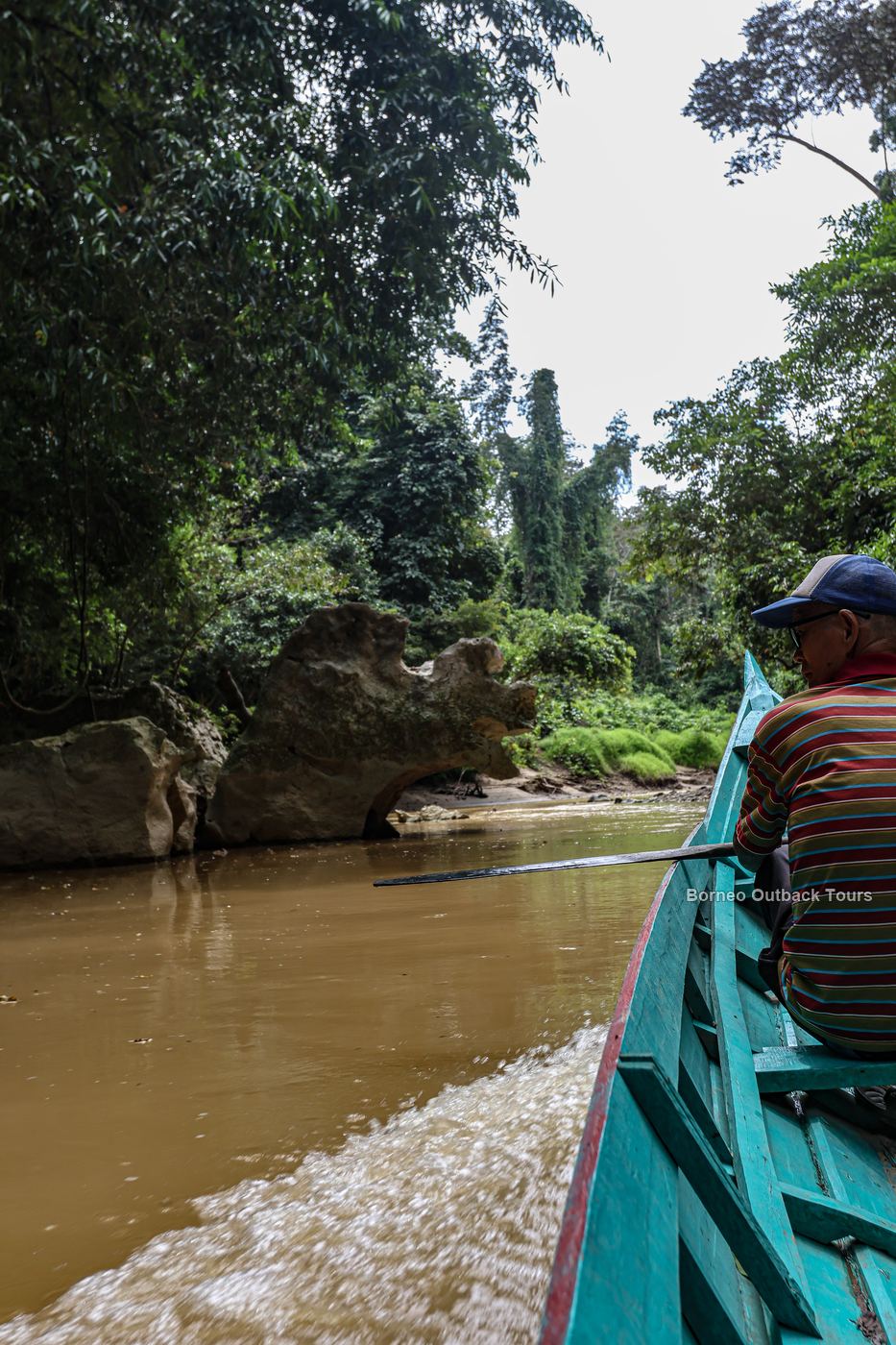
Most visitors to Sabah never hear the name Sapulot. It does not appear on the standard itineraries, it has no resorts, and it takes the better part of a day to reach from the coast. That is precisely why it is one of the most rewarding places in Borneo.
Sapulot sits in the deep interior of southwestern Sabah, a landscape of primary rainforest, limestone pinnacles, jungle rivers and Murut villages. This guide explains what Sapulot is, how to get there, and why it belongs on the list of any traveller who wants to see the Borneo that most tourists miss.
Where Is Sapulot?
Sapulot is a village and a river in Nabawan district, in the Interior Division of southwestern Sabah, close to the border with Indonesian Kalimantan. It lies beyond Keningau, the main town of the interior highlands, at the point where farmland gives way to hills and then to unbroken forest.
Nabawan is the interior’s largest district by area and one of its emptiest by population: forest, limestone, river systems and scattered Murut villages, with the small administrative town of Nabawan in the middle. Everything further in, the Sapulot river, the Pensiangan headwaters and the border country, is reached through Nabawan or not at all.
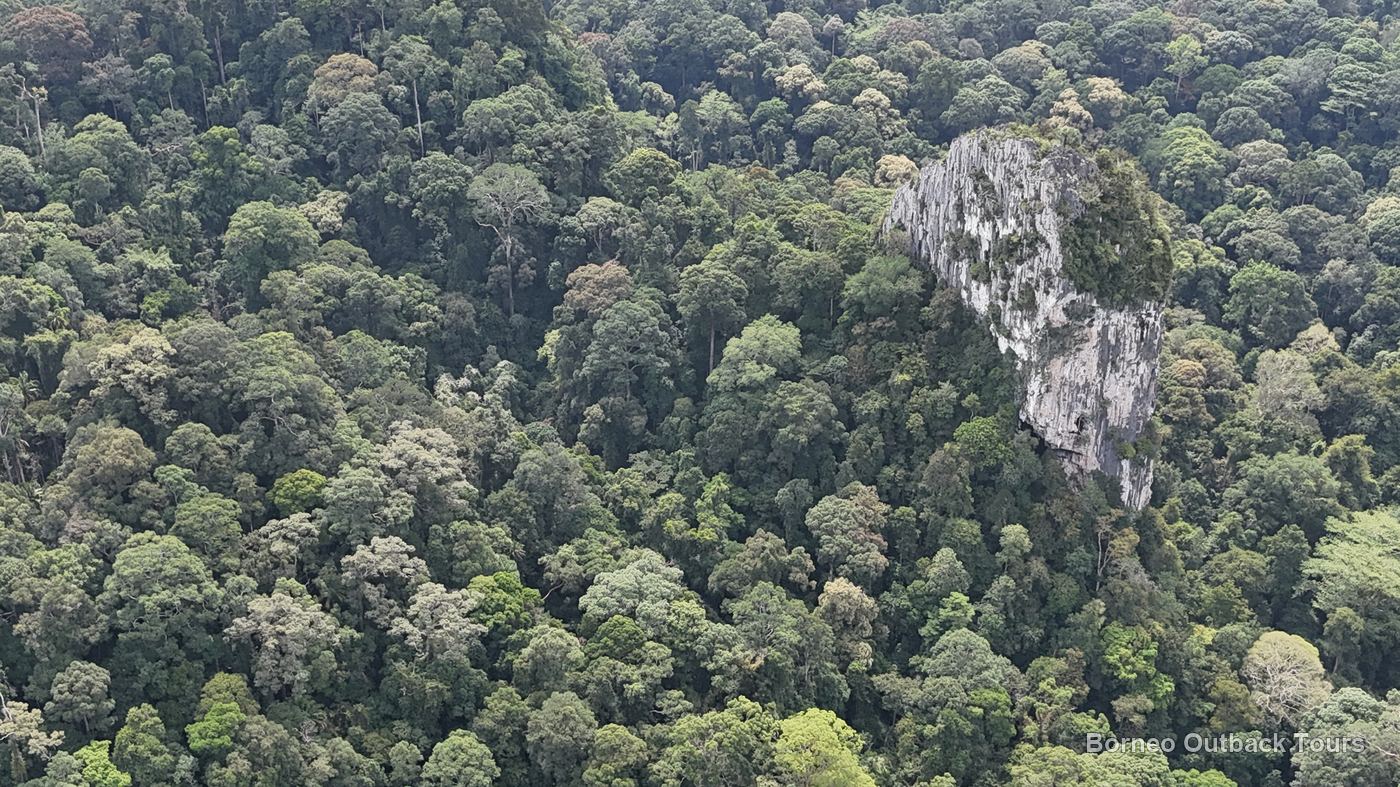
This is the Murut heartland. The Murut are one of Sabah's indigenous peoples, and the villages along the rivers of Sapulot have been their home for generations. Learn more about who the Murut people are and their way of life.
Sapulot or Sapulut?
You will see the name written both ways. Sapulut is the standard Malay spelling, the one on road signs and survey maps. Sapulot is the form used locally, and it is the one in Orou Sapulot, the community tourism project based here. Same river, same village, two spellings. Searching either will find you the same place.
Why Sapulot Is Worth the Journey
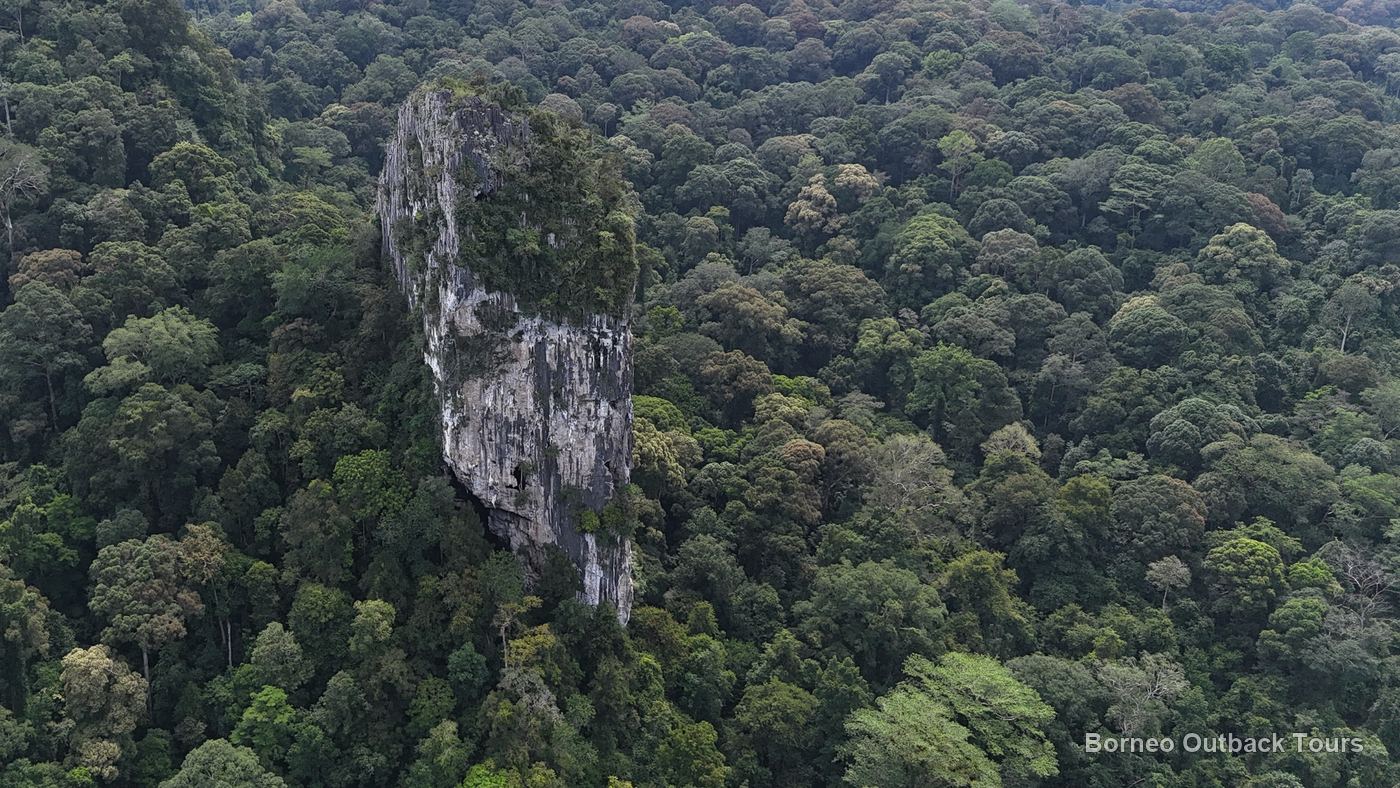
Sapulot is Borneo's last frontier in the truest sense. The forest here is ancient primary rainforest, never logged, and the biodiversity is extraordinary. From the summit of Batu Punggul, the 300 metre limestone pinnacle at the region's heart, there is no road, no building and no cleared land visible in any direction.
What sets Sapulot apart from Sabah's better known destinations is not just how wild it is, but how few people see it. The area receives a tiny fraction of the visitors who go to Kinabalu Park or the Kinabatangan River. There are no crowds and no queues, only a landscape that feels genuinely undiscovered.
What to See and Do in Sapulot
Batu Punggul
The signature experience: a free scale climb up a 300 metre limestone pinnacle rising straight out of the jungle. Read the full Batu Punggul guide for what the climb is really like.
Jungle Rivers and Rapids
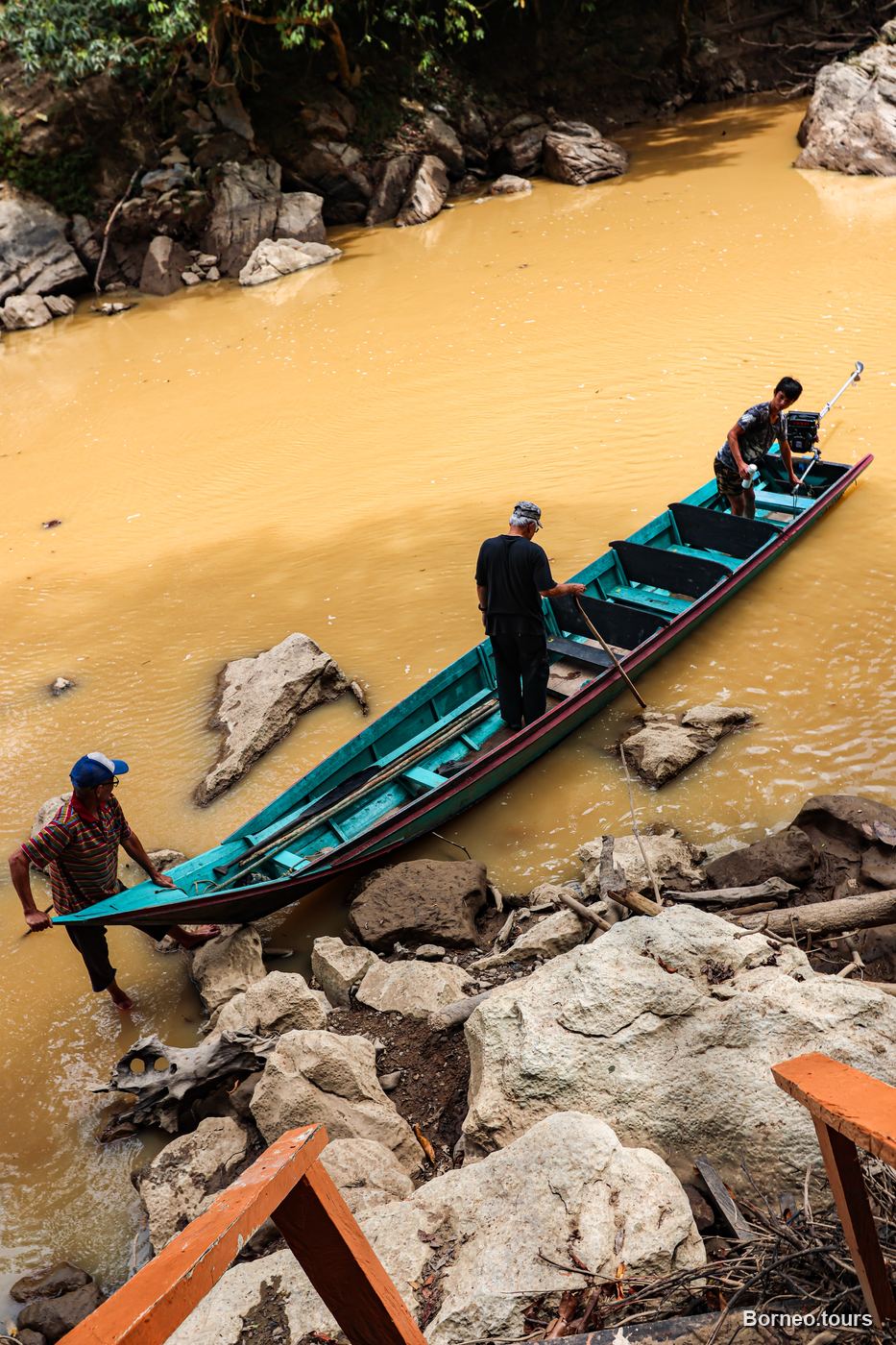
Travel through Sapulot is done by traditional wooden longboat along jungle rivers. One of the highlights is a motorised longboat run through white water rapids toward the Kalimantan border, passing Murut villages and river life along the way.
Caves and Waterfalls
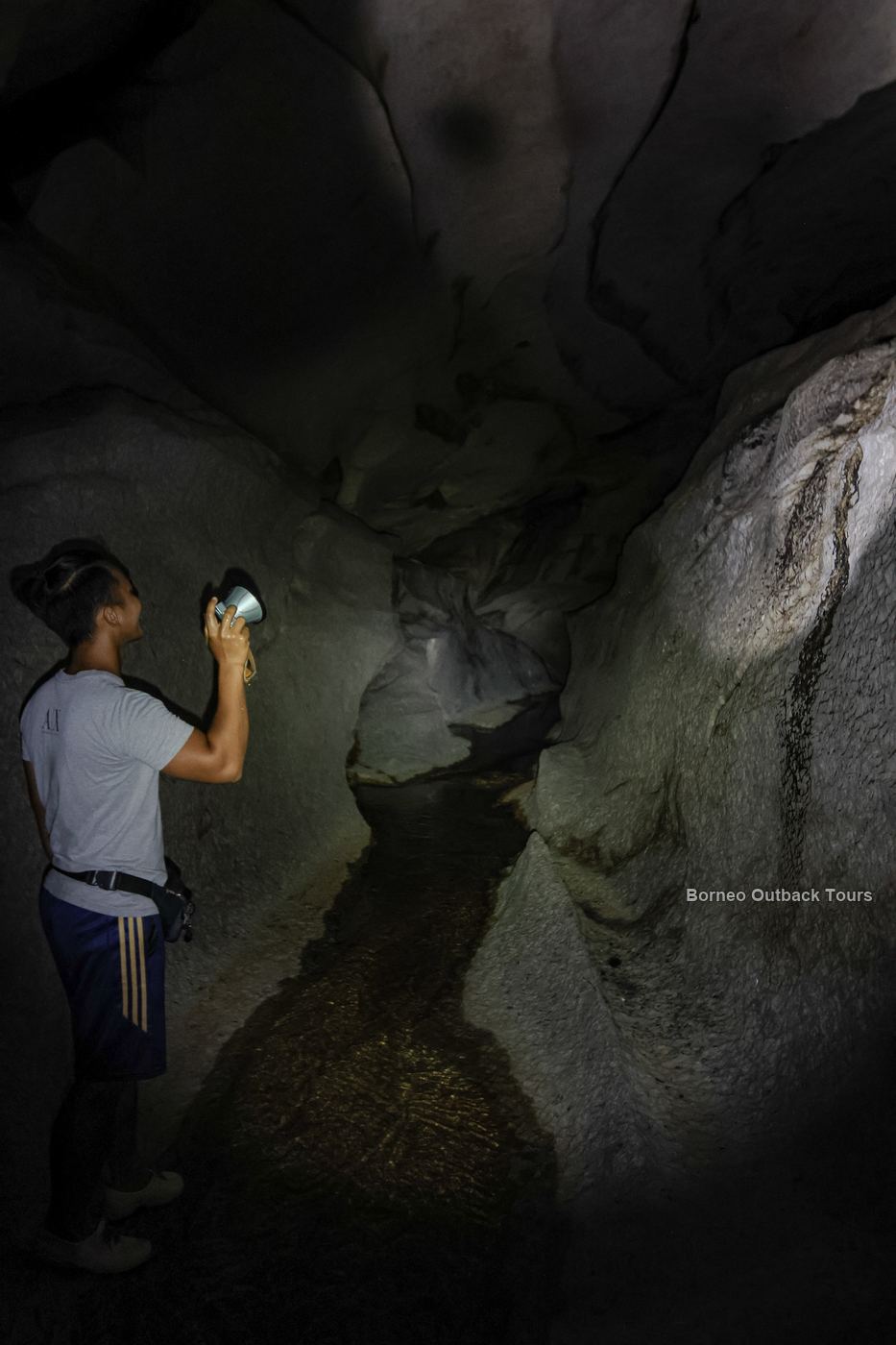
The sacred Pungiton Cave, a multi level system considered holy by the local Murut, sits a short river journey from the villages. Guides lead you in by torchlight, past chambers of strange rock formations and clear pools shaped over thousands of years.
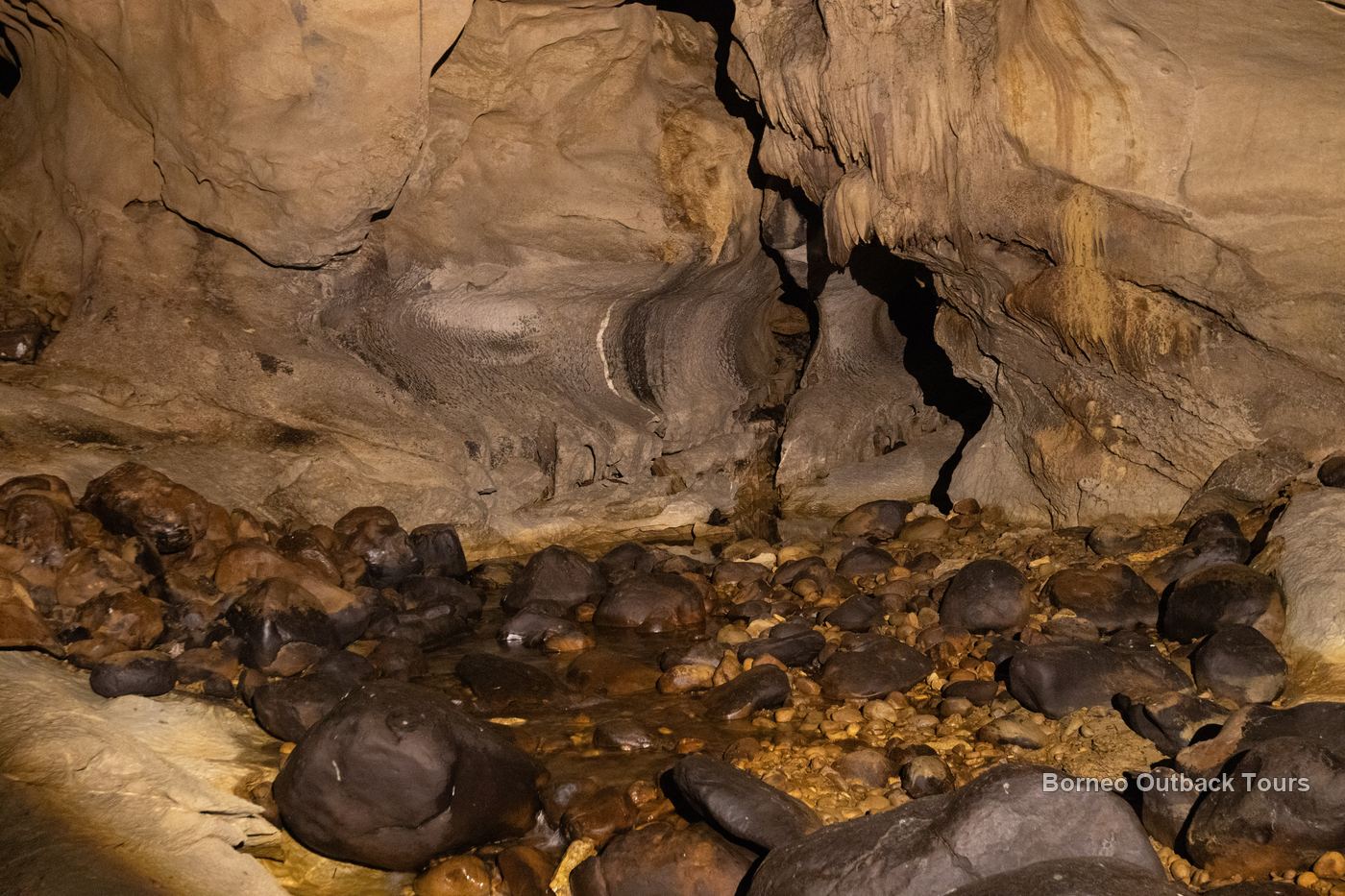
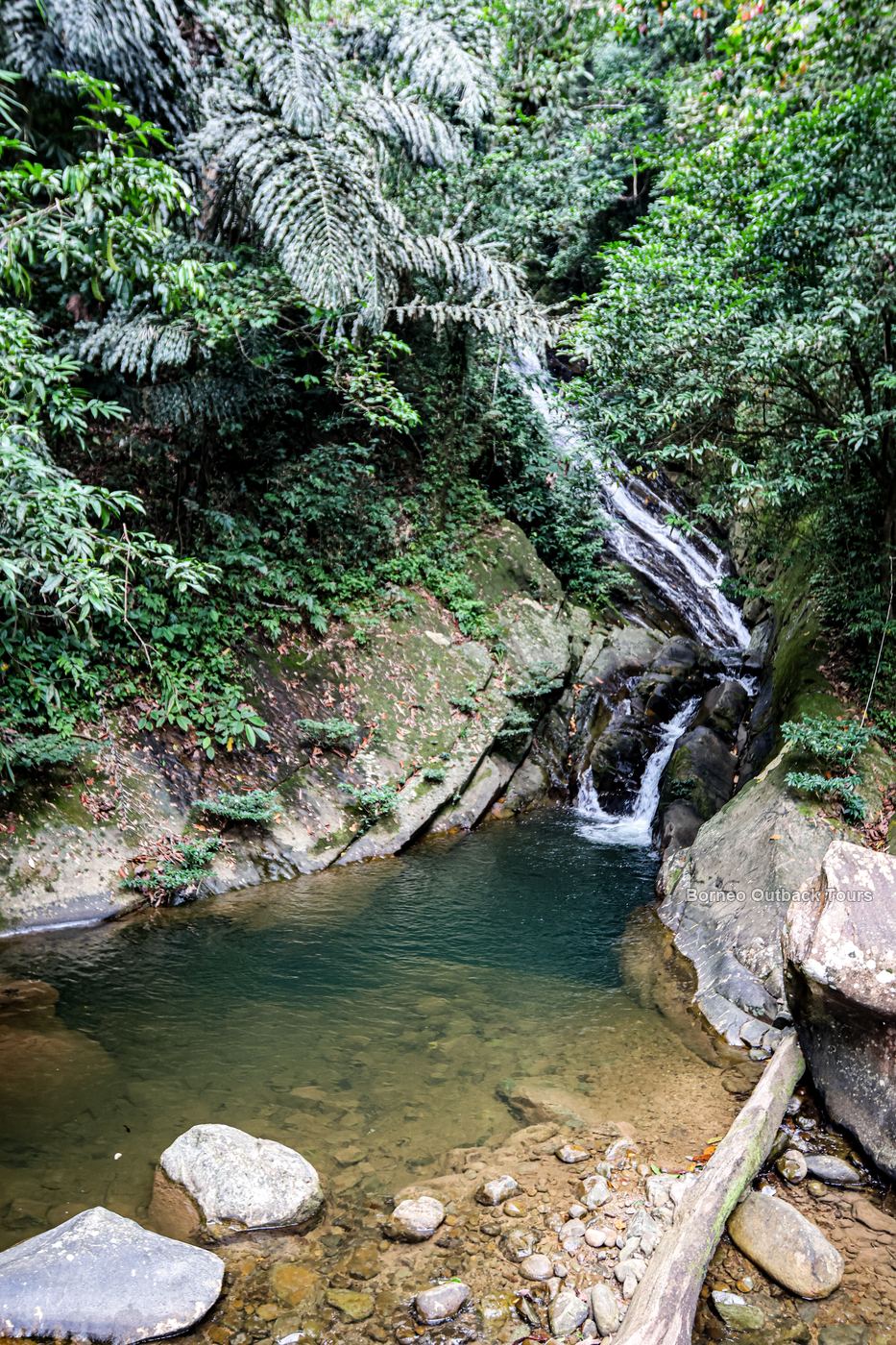
Nearby, the waterfalls of Kabulongou and Vangkaakon offer cold jungle pools deep in the forest, perfect for a swim after a trek.
Murut Culture
An overnight stay in a Murut longhouse brings the Lansaran bamboo trampoline dance, gong music, traditional meals prepared by Murut women, and Tapai rice wine served from a jar through a bamboo straw. For many visitors it is the part of the trip they remember longest.
How to Get to Sapulot
The journey begins in Kota Kinabalu, and the whole run takes 7 to 8 hours of driving. The route climbs south through the Crocker Range to Keningau, about 2.5 to 3 hours, which is the last town with full services, banks and a proper market. From Keningau it continues south to Nabawan town, then roughly 40km further, past a bridge, to Sapulot. The final stretch into the Orou Sapulot area is by longboat and jungle trail.
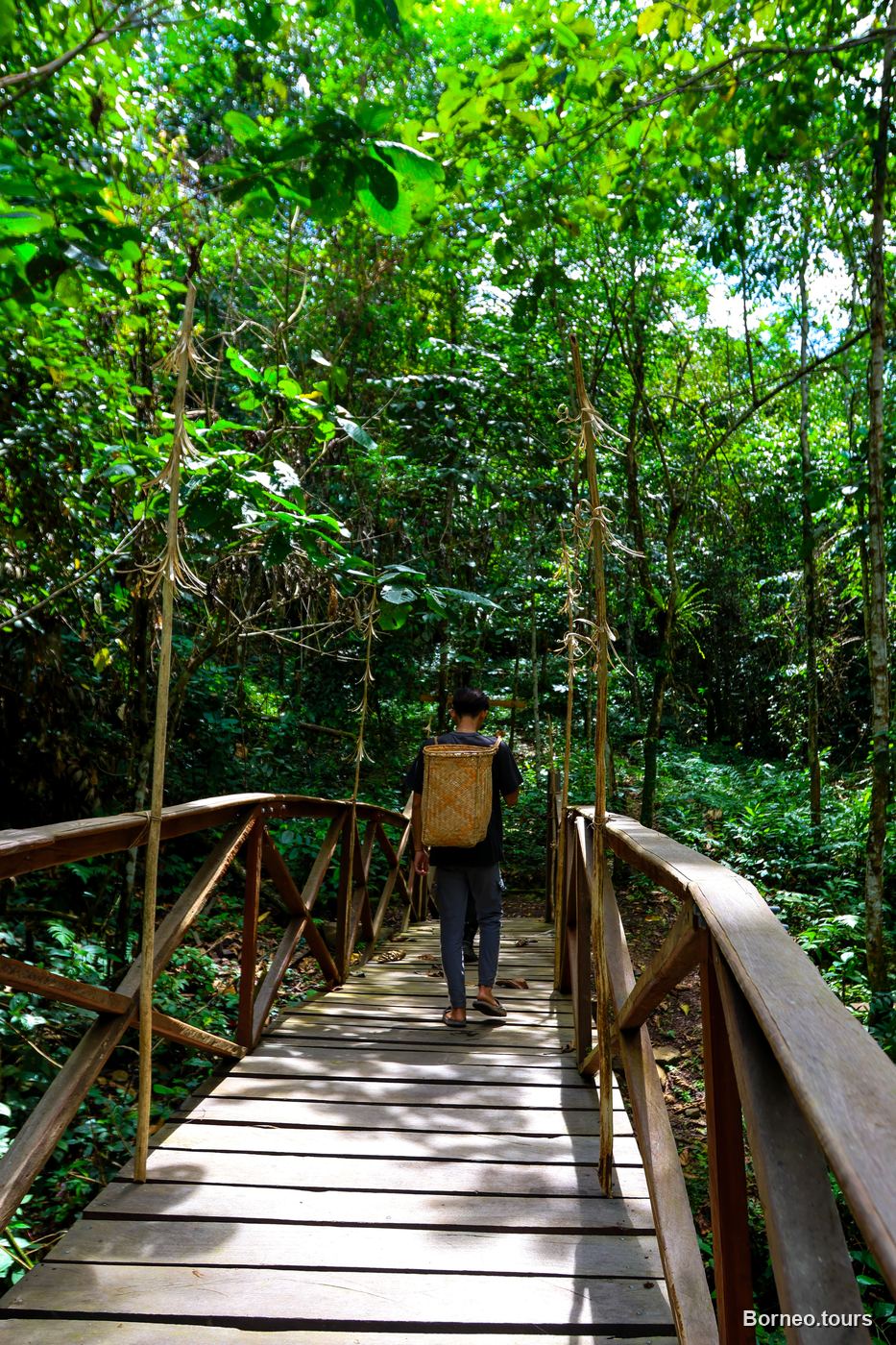
Plan for that last section. A large part of the road past Nabawan is gravel, and the ride is long and bumpy in a way photographs do not convey. A four-wheel drive is the sensible choice; a normal car manages in dry weather with a patient driver. After heavy rain the gravel gets interesting.
Buses and shared vans run from Keningau as far as Nabawan town. Past Nabawan, transport toward Sapulot is informal and unreliable, and there is no walk-in accommodation and no marked trails at the other end. Bring cash from Keningau, because there is nothing to draw on further in, and expect no mobile signal past Nabawan. In practice every visit happens through guided tour packages that include transport from Kota Kinabalu, the boat, meals, accommodation and local guides.
Where to Stay
Accommodation in Sapulot is part of the tour experience: riverside eco camps and the Murut longhouse at Romol Eco-Village. These are simple, comfortable and set in the middle of the forest. There are no hotels, and that is the point.
Best Time to Visit Sapulot
Aim for the dry season, roughly March to October, when river levels suit longboat travel and jungle trails are firmer underfoot. The wet season from November to February brings heavier rain, higher rivers and a different, moodier quality to the forest. April to September gives the most predictable conditions.
Frequently Asked Questions
Is Sapulot the same as Sapulut?
Yes. Both spellings refer to the same village and river in Nabawan district, Sabah. Sapulut is the standard Malay spelling used on maps and road signs; Sapulot is the local form and the one used by the Orou Sapulot community project.
Where is Nabawan?
Nabawan is a district in the Interior Division of Sabah, south of Keningau and east of Tenom. It is the interior's largest district by area and one of the least populated, covering the upper Sook, Sapulot and Pensiangan river systems toward the Kalimantan border. Sapulot sits about 40km beyond Nabawan town.
Is Batu Punggul in Nabawan?
Yes. Batu Punggul is a limestone pinnacle on the Sapulot river in Nabawan district, reached by longboat from Sapulot. Mount Antulai, at 1,713 metres, is about 5km away.
How many days do I need?
Most packages run from 2 to 5 days. Three to four days is enough to combine Batu Punggul, a cave, a waterfall and a Murut cultural night.
Is it suitable for families?
Older children and teenagers who are comfortable with active travel do well here. Discuss younger children with the operator when booking.
The Bottom Line
Sapulot is not easy to reach, and it offers none of the polish of Sabah's coastal resorts. What it offers instead is rarer: intact rainforest, a living indigenous culture, and the feeling of genuine discovery. For travellers willing to go the extra distance, it is the most memorable corner of Borneo.
Sapulot tours are operated by Borneo Outback Tours, founded by the original Murut community of the region.
Related Reading
- Sabah Off the Beaten Path: The Wild Interior & More
- Keningau, Sabah: Travel Guide to the Interior Gateway
- Borneo Itinerary: 7 to 14 Days Done Right
Ready to Experience the Real Borneo?
Small-group jungle, cave and cultural journeys run year-round from Kota Kinabalu, guided by the Murut community of Sapulot.
View Tour Packages WhatsApp Us

.svg)