The Tribes of Borneo: A Guide to the Island's Indigenous Peoples
Borneo's people are as remarkable as its rainforests. The world's third-largest island is home to dozens of indigenous groups, collectively numbering in the millions, whose cultures grew from the forest itself: longhouse societies, river navigators, hill farmers and, historically, some of the most formidable warriors in Southeast Asia. This guide introduces the major tribes of Borneo, what makes each distinct, and where travellers can meet living traditions respectfully.
What Are the People of Borneo Called?
There is no single name. In Indonesian Kalimantan, indigenous groups are broadly called Dayak. In Malaysian Sarawak, terms like Iban, Bidayuh and Orang Ulu are used. In Sabah, the major indigenous peoples are the Kadazan-Dusun, Bajau and Murut. "Dayak" is sometimes stretched to cover all of Borneo's indigenous peoples, but in Malaysia the specific names are preferred, and each group would tell you the differences matter.
The Major Tribes of Sabah
Kadazan-Dusun
Sabah's largest indigenous group, traditionally rice farmers of the west coast plains and Crocker Range foothills. Their Kaamatan harvest festival each May is Sabah's biggest cultural celebration, honouring the rice spirit with feasting, dance and the crowning of the Unduk Ngadau.
Bajau
Two branches share the name: the west coast "cowboys of the east" famed for horsemanship, and the east coast sea Bajau, including communities who live semi-nomadically on the water and freedive to astonishing depths.
Murut
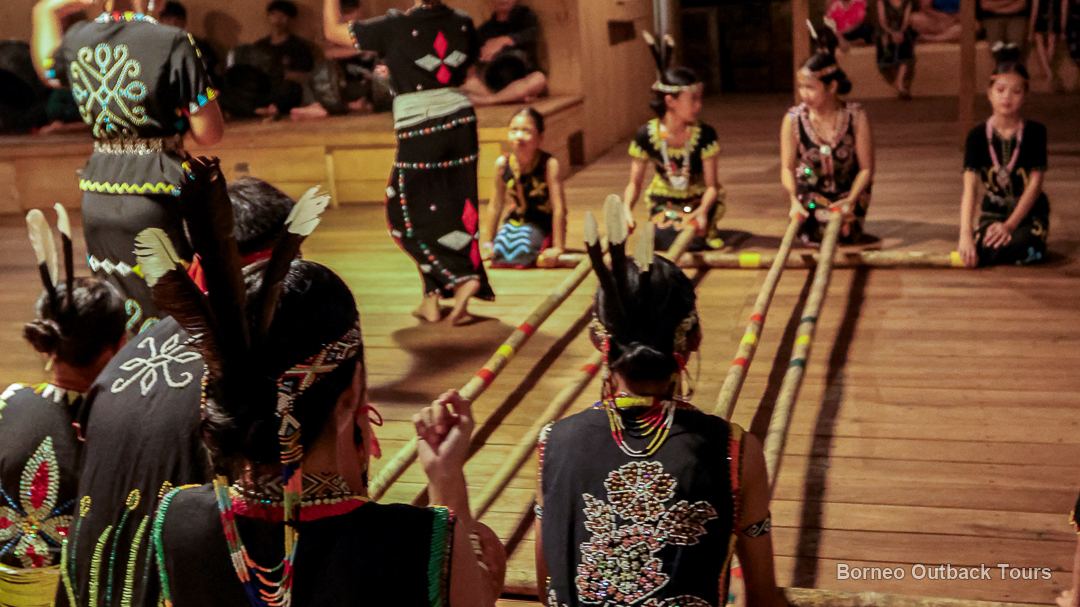
The "people of the hills", masters of Sabah's rugged southwestern interior and the state's last group to abandon headhunting. Murut culture remains strongest around Sapulot: longhouses with sprung Lansaran dance floors, tapai rice wine ceremonies, blowpipe hunting skills and gong music. Read our full guide to who the Murut people are.
The Major Tribes of Sarawak
Iban
Borneo's most numerous indigenous group, the former "Sea Dayaks" whose war fleets once dominated Sarawak's rivers. Iban longhouse culture thrives along the Batang Ai and Lemanak rivers, and Gawai Dayak each June is Sarawak's answer to Kaamatan.
Bidayuh
The "Land Dayaks" of the hills around Kuching, known for bamboo engineering, from aqueducts to the circular baruk head-houses of their villages.
Orang Ulu
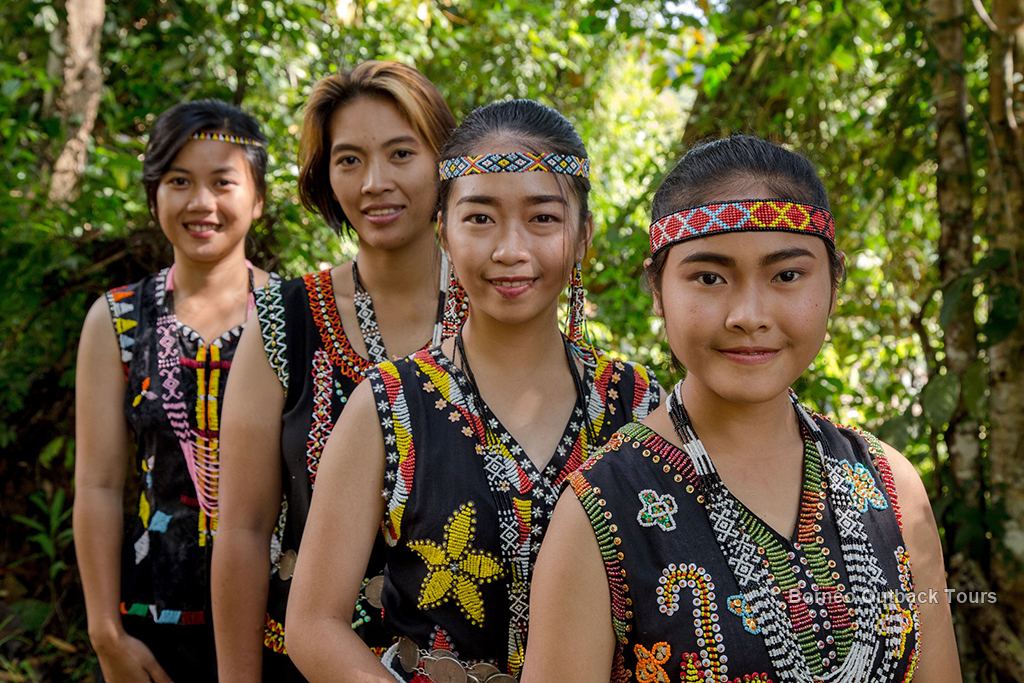
An umbrella for upriver peoples including the Kayan, Kenyah and Kelabit: renowned artists whose tree-of-life murals, beadwork and sape lute music define Borneo's visual and musical identity. The related Penan include some of the world's last recently-nomadic forest peoples.
The Dayak Peoples of Kalimantan
Indonesian Borneo's Dayak groups, Ngaju, Ot Danum, Benuaq, Tunjung and many more, share the longhouse-and-river template with distinct languages and rituals, including elaborate secondary funeral ceremonies. The Tahol and Tidung of North Kalimantan are close relatives of Sabah's Murut, families divided only by the modern border.
What Borneo's Tribes Share
- The longhouse: communal living under one roof, from Iban rumah panjai to Murut longhouses with their dance floors
- Rice culture: hill or wet rice at the heart of ritual life, and rice wine (tapai, tuak) at the heart of hospitality
- River mastery: boats as transport, trade and identity
- Warrior histories: headhunting traditions, long ended, remembered in dance, tattoo and story
- Adat: customary law binding people, land and spirits
Meeting Borneo's Tribes Today
Skip staged "cultural village" shows where you can. The gold standard is community-run tourism, where villages host guests on their own terms and keep the income. In Sabah, the benchmark is the Murut-founded operation in Sapulot: longhouse stays at Romol Eco-Village, Lansaran dancing, tapai ceremonies and jungle travel with village guides, the model of community-based tourism done right.
Borneo's Tribes in the Modern World
The longhouse-and-blowpipe imagery can mislead: Borneo's indigenous peoples are thoroughly modern societies negotiating the same century as everyone else. Dayak, Kadazan-Dusun and Murut professionals fill Borneo's hospitals, universities and parliaments; indigenous land-rights movements are among Malaysia's and Indonesia's most consequential political forces; and cultural revival is visibly gaining on erosion, with young people learning gong music, tattoo traditions and languages their parents' generation was pressured to drop.
Tourism sits right in the middle of this story, capable of caricature or of genuine support depending on how it is done. The encouraging pattern across the island is communities taking ownership: Iban longhouses running their own homestays, Kelabit highland guesthouses, and in Sabah the Murut-founded Sapulot operation that keeps guiding, boats, camps and cultural programming in village hands. When you book community-run, your visit funds the schools, generators and land-defence that keep these societies choosing their own future, and you get the version of Borneo no external operator can stage: people at home, hosting, on their own land, in their own name.
Frequently Asked Questions
What is the biggest tribe in Borneo?
The Iban of Sarawak, with well over 700,000 people. In Sabah, the Kadazan-Dusun are the largest group.
Are Borneo's tribes still headhunters?
No. Headhunting ended by the early-to-mid 1900s across the island. The heritage is remembered culturally, not practised.
Which tribe can I visit most authentically?
Wherever communities control their own tourism. The Murut villages of Sapulot in Sabah and Iban longhouses of Batang Ai in Sarawak both offer genuine, community-run experiences.
The Bottom Line
The people of Borneo are many nations, not one "tribe": Kadazan-Dusun, Bajau, Murut, Iban, Bidayuh, Orang Ulu, and the Dayak peoples of Kalimantan. Meet any of them in their own villages, sharing their own rice wine, and Borneo stops being scenery and becomes a society, one that has thrived in these forests for thousands of years.
Murut cultural journeys are operated by Borneo Outback Tours, founded by the Murut community of Sapulot, Sabah.
Related Reading
- Who Are the Murut People? | Borneo Outback Tours
- Murut People: Sabah, Sarawak, Brunei or Kalimantan?
- Headhunters of Borneo: The True Story of the Murut
Ready to Experience the Real Borneo?
Small-group jungle, cave and cultural journeys run year-round from Kota Kinabalu, guided by the Murut community of Sapulot.
View Tour Packages WhatsApp Us

.svg)