
Things to Do in Borneo: 15 Experiences That Actually Matter
Borneo is the third-largest island on Earth, shared by three countries and covered by some of the oldest rainforest in existence. You cannot do all of it. What you can do is choose experiences that are actually Bornean: the ones below are the island at its best, chosen by people who live in its interior.
The 15, sorted by where they are and what they cost
The single biggest planning mistake in Borneo is treating this as a list to tick rather than a map to route. Sabah's east coast, its west coast and its interior are three different trips, and the flights between them eat days. Here is the shortlist arranged the way you actually need it.
| Experience | Where | Time needed | Cost band | Pick it if |
|---|---|---|---|---|
| Orangutans, Sepilok | Sabah, east | Half day | Low | Everyone, first trip |
| Kinabatangan cruise | Sabah, east | 2 nights | Mid | Wildlife above all |
| Longhouse stay | Sabah interior or Sarawak | 1 to 2 nights | Mid | Culture, real contact |
| Batu Punggul climb | Sapulot, Sabah | 2 to 3 days | Mid | Nobody else has done it |
| Caves, Pungiton or Mulu | Sapulot / Sarawak | 1 to 3 days | Low to high | Underground scale |
| Mount Kinabalu | Sabah, west | 2 days + permit | High | The summit photo |
| Sipadan diving | Sabah, southeast | 3+ days | High | Divers, book early |
| Danum Valley | Sabah, east | 2 to 3 nights | High | Primary forest, birders |
| Island-hopping, KK | Kota Kinabalu | Half day | Low | Filling a spare afternoon |
| Tamu market | Anywhere, weekly | 2 hours | Free | Food, people, colour |
Cost bands are relative to a Borneo trip rather than absolute: low is under a hundred ringgit a head, high means the lodge or the permit is the main line on your budget. Our real cost breakdown has the numbers.
1. Meet orangutans
The island's great icon. See rehabilitated apes at Sepilok in Sabah or Semenggoh in Sarawak, or hold out for the real prize: a wild orangutan nest-building at dusk along the Kinabatangan.
2. Cruise the Kinabatangan
Sabah's great wildlife river: proboscis monkeys, hornbills, crocodiles, and with luck pygmy elephants, watched from a small boat at dawn. Our Kinabatangan guide covers it properly.
3. Sleep in a longhouse
One roof, many families, and an evening of food, tapai and music you will not forget. Iban longhouses in Sarawak are famous; the Murut longhouse at Sapulot in Sabah is community-owned and part of a bigger interior journey.
4. Climb Batu Punggul
A 300-metre limestone pinnacle rising sheer from the rainforest of the Sabah interior, sacred to the Murut and climbed barehanded via roots and ledges. The summit view, and the story, are unmatched: here is the full guide.
5. Go underground
Borneo does caves at planetary scale. Mulu in Sarawak has the world's largest chamber; Niah holds ancient human history; and in Sabah's interior, Pungiton offers river caves you explore by torchlight with Murut guides, sleeping at a jungle camp by the entrance.
6. Summit Mount Kinabalu
Southeast Asia's most famous mountain: 4,095 metres, climbed over two days through cloud forest to a bare granite dawn. Book well ahead; permits are limited.
7. Swim under a waterfall
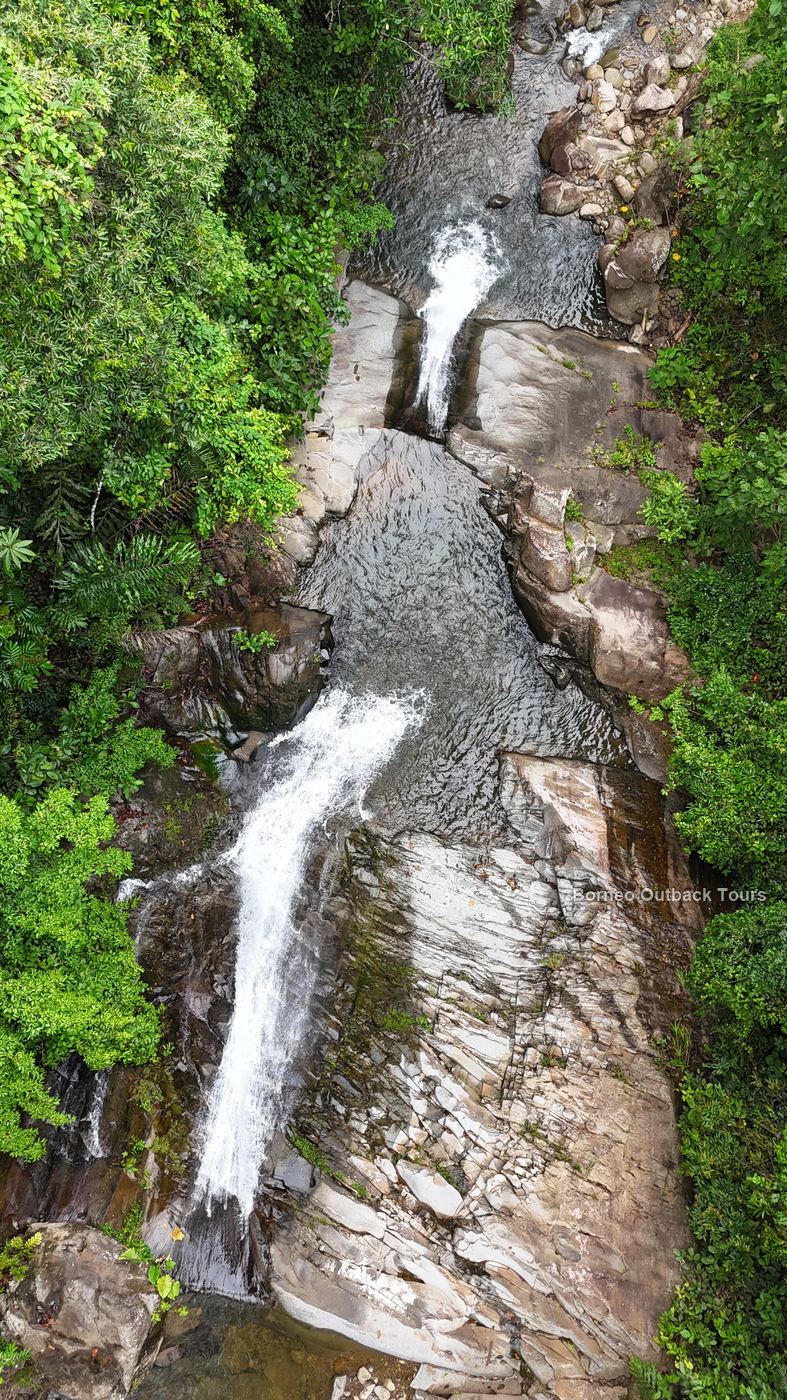
The interior is full of them, and the best have no crowds at all. Kabulongou, the tiered falls in the Sapulot area, drops into swimmable jungle pools; our Sabah waterfalls guide lists the rest.
8. Dive or snorkel Sipadan
Regularly ranked among the best dive sites on the planet: turtles beyond counting, barracuda tornadoes, wall dives into deep blue. Permits are capped daily, so plan early.
9. Ride a longboat upriver
Before roads, Borneo moved by river, and in the deep interior it still does. A longboat journey up the Sapulot river system, reading rapids with a Murut boatman, is transport and adventure in one.
10. Drink tapai properly
Rice wine from a shared ceramic jar through a bamboo straw, offered with ceremony and mischief in equal parts. The tapai ritual is Borneo hospitality distilled.
11. Walk the canopy
Rainforest life happens forty metres up. Canopy walkways at Sepilok and in Danum Valley put you at eye level with it.
12. Visit a tamu market
Sabah's weekly markets are the state's living pantry: jungle produce, smoked wild boar, sago grubs, pickled bambangan. Go hungry and curious.
13. See Danum Valley's primary forest
One hundred and thirty million years of unbroken rainforest. Costly, remote and worth it for serious wildlife watchers: this is where clouded leopard sightings happen.
14. Island-hop off Kota Kinabalu
Tunku Abdul Rahman Park's islands are twenty minutes from the city: easy snorkelling, beach afternoons and sunsets over the South China Sea to bookend a jungle trip.
15. Go where the roads end
Borneo's rarest experience is simply its deep interior, the part that never built a resort. In Murut country around Orou Sapulot and Pensiangan, travel still runs on rivers, longhouses and local knowledge, and visitors are guests rather than customers. Start there and the rest of the island makes sense.
How to combine these into one trip
Three shapes work. Everything else is a variation on them.
One week. Pick a coast and the interior, not both coasts. Kota Kinabalu in, island afternoon, then straight to the interior for Sapulot: river, cave, Batu Punggul, longhouse. Out from Kota Kinabalu. You will see less on paper and remember more of it.
Ten days. The classic. Add the east coast: Sepilok and a Kinabatangan cruise slot in before or after the interior leg. This is the itinerary most people should book, and it is laid out properly in our Borneo itinerary guide.
Two weeks. Now you can add Sarawak, or Kinabalu, or Sipadan, but only one of the three. Trying for all of them turns a holiday into a logistics exercise.
What to skip, honestly
We run tours here, so take this as it is meant: some of Borneo's famous list is worse value than the brochures suggest.
- Any orangutan photo opportunity that is not a rehabilitation centre. Sepilok and Semenggoh are conservation operations. Anything offering a guaranteed cuddle is not.
- Mount Kinabalu on a tight schedule. Permits sell out months ahead and the climb needs two days plus a recovery day. Squeezed in, it wrecks the rest of the trip.
- Cultural villages, if you are also doing a real longhouse stay. They are a reasonable substitute when you have no time for the interior, and redundant when you do.
- Firefly tours near the cities. Pleasant, brief, and not why you flew here.
- Two coasts in under a week. The internal flight plus transfers costs you most of a day at each end.
What nobody regrets: the days with no phone signal. That is the whole case for the interior.
Several of these experiences live in one valley: Orou Sapulot, the Murut-owned corner of Sabah's interior.
Frequently Asked Questions
How many days do you need in Borneo?
Seven days is the realistic minimum for one coast plus the interior. Ten days is the sweet spot and lets you add the Kinabatangan and Sepilok without rushing. Two weeks lets you add Sarawak, Mount Kinabalu or Sipadan, but sensibly only one of those three.
What is the single best thing to do in Borneo?
For most first-time visitors it is a Kinabatangan River cruise, because the wildlife odds are the best in Borneo and it needs no fitness. For anyone who wants the version their friends have not done, it is the interior: a longboat to Sapulot, a torchlit cave and the climb up Batu Punggul.
What is there to do in Borneo besides see orangutans?
A great deal. Caving at Pungiton or Mulu, climbing Batu Punggul or Mount Kinabalu, diving Sipadan, staying overnight in a Murut or Iban longhouse, longboat river journeys, canopy walkways, waterfalls and weekly tamu markets. Orangutans are the headline, not the trip.
What can you do in Borneo in one week?
One coast and the interior. Land in Kota Kinabalu, spend an afternoon on the islands, then head inland to Sapulot for the river, the caves, Batu Punggul and a longhouse night, and fly out from Kota Kinabalu. Skip the second coast.
Are things to do in Sabah different from Borneo generally?
Sabah holds most of the accessible highlights: the wildlife corridor, the highest mountain, the best diving and the deepest interior culture. Sarawak leads on giant show caves and the famous Iban longhouse rivers. Our Sabah vs Sarawak comparison covers the split in detail.
What is the best time of year to do all this?
March to October is the dry-season window and the most reliable for trekking, caving and river travel. Wildlife watching on the Kinabatangan holds up well year-round and can be better in the wetter months when animals concentrate along the river.
Can you do these things independently, without a tour?
The city, island and Sepilok side of Borneo is straightforward independently. The interior is not: Sapulot needs a longboat, local permission and a guide who knows the caves, and the communities there arrange access themselves rather than through booking sites.
Is Borneo expensive to travel?
Day to day it is cheap: food, local transport and simple rooms all cost little. The expensive parts are internal flights, national park permits and the remote forest lodges, so budget by activity rather than by day.
Related Reading
- Borneo Tours: The Complete Guide to Doing It Right
- The Ideal Borneo Itinerary: 10 Days to 2 Weeks
- Things to Do in Sabah: The Complete Adventure Guide
Ready to Experience the Real Borneo?
Small-group jungle, cave and cultural journeys run year-round from Kota Kinabalu, guided by the Murut community of Sapulot.
View Tour Packages WhatsApp Us

.svg)