
Murut Culture and Traditions: Inside the World of Sabah's Hill People
Murut culture is one of Borneo's great living traditions. In the hill country of Sabah's interior, the Murut people still gather in longhouses, still brew tapai rice wine in ceramic jars, still dance on the sprung bamboo Lansaran, and still pass down the stories of a warrior past. This guide walks through the traditions that define Murut life, and how respectful travellers can experience them first-hand.
The Longhouse: Heart of Murut Society
Traditional Murut life centres on the longhouse, a raised wooden structure sheltering many families under one roof. The shared veranda functions as village square, meeting hall and dance floor. While most Murut families today live in individual homes, longhouses remain the ceremonial heart of the community, and at Romol Eco-Village in Sapulot guests still sleep, eat and celebrate in one.
The Lansaran: A Dance Floor That Bounces
The most famous feature of a Murut longhouse is the Lansaran, a section of floor built on flexible hardwood beams that acts like a giant trampoline. Dancers gather in a circle, singing and bouncing in rhythm, driving the platform higher until one leaps to snatch a prize hung from the ceiling. It is joyous, communal and completely unique to the Murut. Guests are always pulled in; refusing is considered poor sport.
Tapai: The Rice Wine of Celebration
No Murut celebration happens without tapai, rice or cassava fermented in glazed jars for weeks or months. It is drunk through a long bamboo straw directly from the jar, with guests of honour served first. Sharing tapai seals friendships, marks agreements and welcomes visitors, and declining a sip takes some diplomacy. The drink is inseparable from hospitality, the highest Murut virtue.
Traditional Dress and Adornment
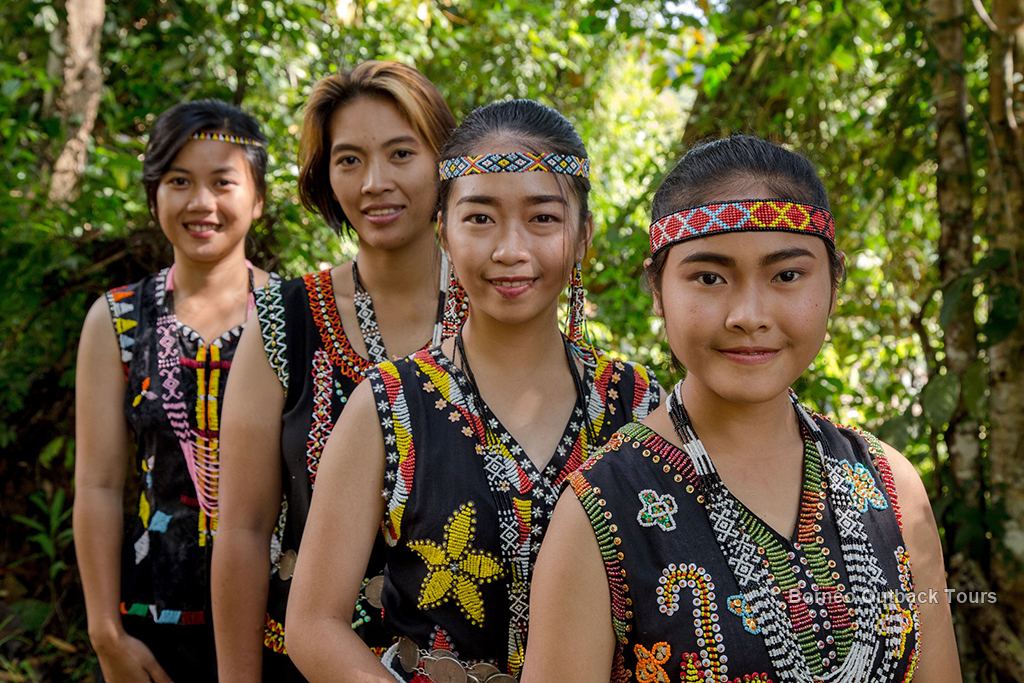
Murut ceremonial dress is among Borneo's most striking. Men wear jackets of treated bark cloth trimmed with hornbill feathers and beadwork; women wear black cotton blouses and skirts heavy with antique beads passed down through generations. Distinctive beaded belts and headbands identify family and status. Full regalia appears at weddings, festivals and cultural performances, including those held for visitors in Sapulot.
Music, Song and Storytelling
Gong ensembles provide the soundtrack to Murut ceremony, layered rhythms that carry across valleys. Alongside them sit epic songs and oral storytelling, the traditional vessels of Murut history in a culture that wrote nothing down. An evening in a longhouse typically moves from dinner to gongs to stories, often of the headhunting era, told by elders who heard them from their own grandparents.
Belief, Ritual and the Sacred Landscape
Traditional Murut belief saw power in the landscape: rivers, caves and mountains held spirits that demanded respect. Pungiton Cave near Sapulot was a burial and ritual site, and it remains sacred ground visited with ceremony today. Most Murut now practise Christianity, but the old respect for the land runs underneath, one reason the community leads conservation and community-based tourism in the region rather than logging it.
Farming, Hunting and Forest Craft
Murut livelihoods traditionally combined hill rice farming, hunting with blowpipe and dog, river fishing and gathering forest produce. That knowledge survives: guides in Sapulot can read animal sign invisible to visitors, name a use for most plants on a trail, and build shelter, fire and fish traps from what the forest provides. Trying the blowpipe remains a favourite guest activity, and it is far harder than the guides make it look.
Experiencing Murut Culture Respectfully
- Visit through community-run operators so income reaches the villages that keep traditions alive
- Accept hospitality, especially tapai, graciously, even a token sip honours the gesture
- Join the Lansaran when invited: enthusiasm matters more than skill
- Ask before photographing people or ritual sites
- Buy crafts directly from makers in the villages
The Murut Calendar: Festivals and Ceremonies
Murut cultural life follows the farming year. Land clearing, planting and harvest each carried rituals in the old religion, and the biggest celebrations still cluster after harvest, when rice is stored, tapai jars are ready and communities have time to gather. May's Kaamatan season sees Murut districts hold their own festivals alongside the Kadazan-Dusun celebrations, with Keningau and Tenom hosting major gatherings: expect Lansaran competitions, blowpipe contests, beauty pageants in full beaded regalia and jar after jar of tapai.
Life-cycle ceremonies remain strong too. Murut weddings are famous for their scale of exchange: negotiations of antique jars, gongs and buffalo between families that can span years, a system that binds villages together in webs of obligation and alliance. Funerals and their follow-up feasts, blessings for new longhouses, and welcome ceremonies for honoured guests all follow forms passed down for generations. Visitors on village stays are folded into whatever the calendar offers; being present for even a small ceremony is worth rearranging a day for.
Frequently Asked Questions
Where can I experience Murut culture?
The Sapulot region of Sabah's interior offers the most authentic access: longhouse stays, Lansaran dancing, tapai ceremonies and blowpipe demonstrations run by the Murut community through Borneo Outback Tours.
What is the Murut trampoline dance called?
The Lansaran: a sprung bamboo and hardwood platform built into the longhouse floor, danced on during celebrations.
Do the Murut still live traditionally?
The Murut live modern lives, but traditions remain strong: longhouses host ceremonies, tapai is brewed for every festival, and cultural knowledge is actively passed to younger generations.
The Bottom Line
Murut culture is not a museum display; it is a living tradition kept vigorous by communities proud of who they are. Experience it where it belongs, in the longhouses of Sapulot, with a jar of tapai open, gongs ringing and the floor literally bouncing beneath your feet.
Murut cultural experiences are operated by Borneo Outback Tours, founded by the Murut community of the Sapulot region.
Related Reading
- Tapai: Borneo's Rice Wine and How to Drink It Right
- Magunatip: The Murut Bamboo Dance of Sabah
- Who Are the Murut People? | Borneo Outback Tours
Ready to Experience the Real Borneo?
Small-group jungle, cave and cultural journeys run year-round from Kota Kinabalu, guided by the Murut community of Sapulot.
View Tour Packages WhatsApp Us

.svg)