
The Murut Subgroups: Who's Who Among Sabah's Hill People
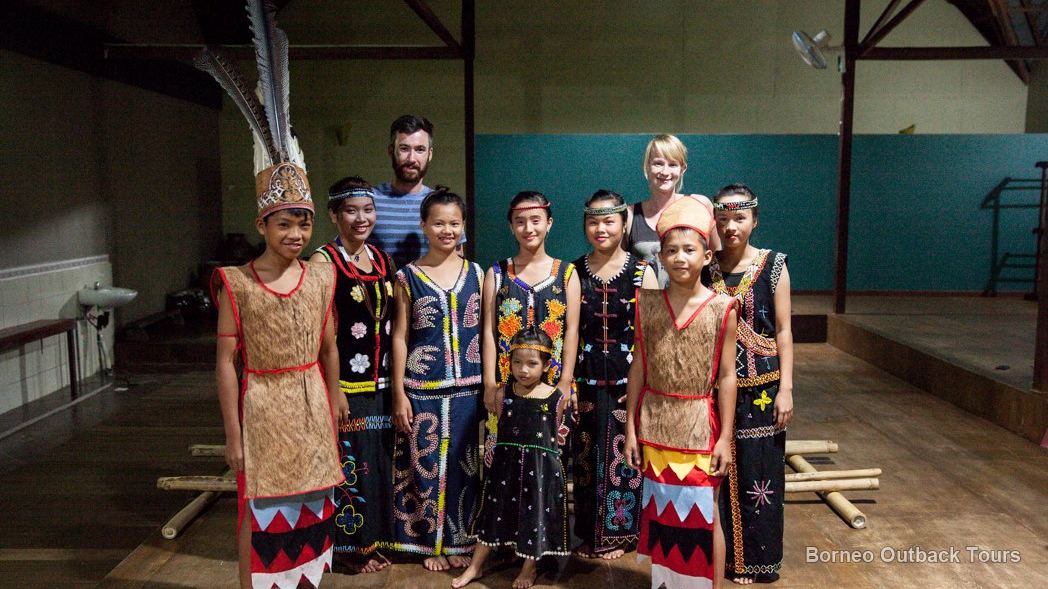
Ask in Kota Kinabalu who the Murut are and you will get a short answer: the hill people of the interior, the last of Sabah's tribes to give up headhunting. Ask in Nabawan or Tenom and you will get a longer one, because the person answering will first want to know which Murut you mean.
Murut is an umbrella. Underneath it sit roughly 29 sub-ethnic communities with their own dialects, dances, dress and, in plenty of cases, their own strong opinions about the others. Anyone reading about Sabah's interior runs into the names sooner or later, so here is what they mean.
Where the name comes from
The word itself is not Murut. One reading traces it to old Malay turut-ed, roughly to follow or to move on; another to the Bajau belud, hill, which gives the familiar gloss of hill people. Either way it was a label applied from outside, by coastal traders and later by colonial administrators who needed one word for the many communities upriver. The communities themselves used, and still use, their own names.
Highland and lowland
The most useful first cut is altitude. Lowland Murut settled the river plains of Tenom, Keningau, Beaufort and Tawau, where wet rice and, later, roads and mission schools arrived first. Highland Murut stayed in the interior uplands of Nabawan, Pensiangan, Sipitang and upper Tenom, on hill rice, hunting and the rivers.
That difference explains a lot. Lowland groups converted earlier and in larger numbers, saw the timber and plantation economy arrive at their doorstep, and today live mostly in individual houses in accessible districts. Highland groups kept longhouse life, forest knowledge and the old dialects longer, partly by choice and partly because the road took another fifty years to arrive.
The main subgroups
Tagol, also written Tahol or Tagal, is the largest and the one outsiders meet most. Tagol communities run through the upper interior from Kemabong and Tomani in Tenom across to Nabawan, Pensiangan and the Sapulut river, and across the borders into Sarawak and North Kalimantan. Because Tagol reaches so far, it doubles as the lingua franca when Murut from different districts meet. Tagol women's formal dress, the pinongkoloh, is the black beaded outfit that appears in most photographs of Murut culture.
Timugon are the Tenom lowlanders, farmers of the Padas valley plains. They took to Catholic missions early and had largely converted by the 1960s. Their language is one of the better documented Murut tongues, and since 2024 it has been taught in a pilot programme in ten primary schools.
Nabai live on the Keningau plains and are known for the mansayau dance. Bookan, sometimes written Baukan, are centred on Sook in the same district, with the mangalai. Dalit occupy the Dalit and Sook valleys nearby. These three are the reason Keningau town works as the cultural crossroads of the interior: three Murut communities, plus Dusun neighbours, all in market range.
Paluan are highland people of the Padas headwaters reaching toward the Dalit river, with the ansayau dance. Kolod, also Kolor or Okolod, trace their origin to Pensiangan before moving toward Sipitang, and keep the alang sirung and alang kolod dances. Sumambu, Alumbis and Salalir are smaller highland communities of the same belt.
Tangala, spelled Tangara or Tengara in some sources, sit apart from the rest, spread from the upper Kinabatangan across to the Kuamut river in eastern Sabah. They are known for the kulundi instrument and for dances the western Murut do not share. Serudong are the far east-coast group in Tawau Division, and Binta, also called Sandewad, live along the Padas.
And there is a subgroup called Sapulut, of South Sook and the Sapulut river, which is a useful reminder that in the interior a place name and a people's name are often the same word.
Different names, one language family
Linguists sort all of this into the Murutic family, a branch of Austronesian, usually counted as about a dozen languages in three clusters. Northern Murutic languages are Sabah's; southern ones run into Brunei, Sarawak and North Kalimantan. Neighbouring communities can generally follow each other, and the further apart two villages are, the harder that gets, which is exactly what you would expect of a family spread over mountains. For more on how it sounds and a few words to try, see our guide to the Murut language.
What the subgroups share
Enough that the umbrella is not meaningless. Rivers as roads. The longhouse, now mostly replaced by family houses but still standing in places like Sapulot. Hill rice and the tapai made from it. Bark cloth and beadwork, the lalandau feather headdress worn by men. The magunatip bamboo dance. And the barian sampai mati, the lifelong dowry, still taken seriously among the Tahol Murut of Nabawan and Tenom, in which a marriage payment can run for decades and pass to the next generation.
The 2010 census counted about 112,900 Murut in Malaysia, roughly 6.4 per cent of Sabah's Bumiputera population. Small, in other words, and spread across a lot of mountain.
Meeting them
The interior districts are where the culture is still daily rather than staged. Around Sapulot and Pensiangan that means Tagol: Tagol at the dinner table, Tagol in the songs, and elders who can tell you which river their family came down and roughly when. It is worth asking. The answer is usually more interesting than the label on the map.
Frequently Asked Questions
Meet a Murut community on their own ground at Orou Sapulot, in the Tagol-speaking heartland of the upper Sapulut river.
How many Murut subgroups are there?
Around 29 are usually counted, though the number depends on whether you split or lump closely related communities. The main ones include Tagol (Tahol), Timugon, Nabai, Bookan, Paluan, Kolod, Tangala, Sumambu, Serudong, Alumbis, Binta, Dalit and Sapulut.
Where do the Murut come from?
The Murut are indigenous to the interior uplands of northern Borneo, spread across what is now southwest Sabah, northern Sarawak, Brunei's Temburong district and North Kalimantan. Their settlements have always followed the rivers of that upland belt: the Padas, Pegalan, Sook, Sapulut and Pensiangan systems.
What is the difference between highland and lowland Murut?
Lowland Murut live on the plains of Tenom, Keningau, Beaufort and Tawau, and include the Timugon, Nabai, Bookan, Dalit, Binta and Serudong. Highland Murut live in the interior around Nabawan, Pensiangan, Sipitang and upper Tenom, and include the Tagol, Paluan, Kolod, Sumambu and Alumbis. The split shaped farming, dress and dialect.
Which Murut subgroup lives at Sapulot?
The communities of the upper Sapulut river, including Sapulot and Pensiangan, are Tagol speakers, and Tagol Murut also works as the common language when subgroups from different districts meet.
Are the Murut the same as the Lun Bawang or Lundayeh?
No, though they are neighbours and are sometimes grouped together in older sources. The Lun Bawang and Lundayeh speak languages from a different branch and centre on the Sarawak and Kalimantan highlands, but centuries of intermarriage along the border have blurred the edges.
Related Reading
- Who Are the Murut People?
- Murut Language: Meaning, Words and Where It's Spoken
- Murut People: Sabah, Sarawak, Brunei or Kalimantan?
Ready to Experience the Real Borneo?
Small-group jungle, cave and cultural journeys run year-round from Kota Kinabalu, guided by the Murut community of Sapulot.
View Tour Packages WhatsApp Us

.svg)